Back to: Rough Diamond Grading and Evaluation
Lesson 7
Until the middle of 20th century there was no agreed-upon standard by which diamonds could be judged. The GIA created the first and now globally accepted standard for describing diamonds: Color, Clarity, Cut and Carat Weight. Today the 4 C’s of diamonds quality is the universal method of assessing the quality of any diamond, anywhere in the world. The creation of the diamonds 4 C’s meant two very important things: diamond quality could be communicated in a universal language and diamond customers could now know exactly what they were about to purchase.
Colour
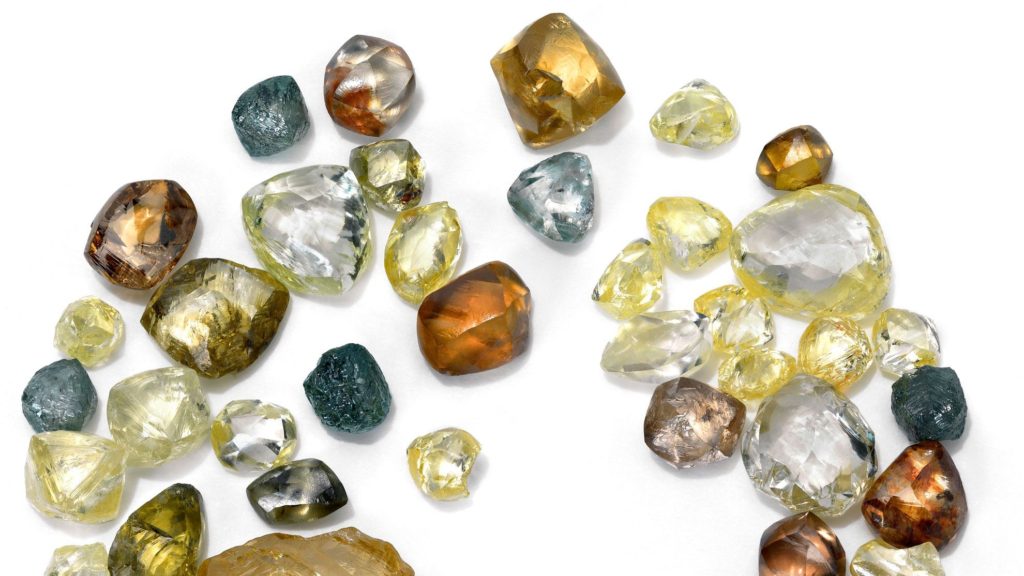
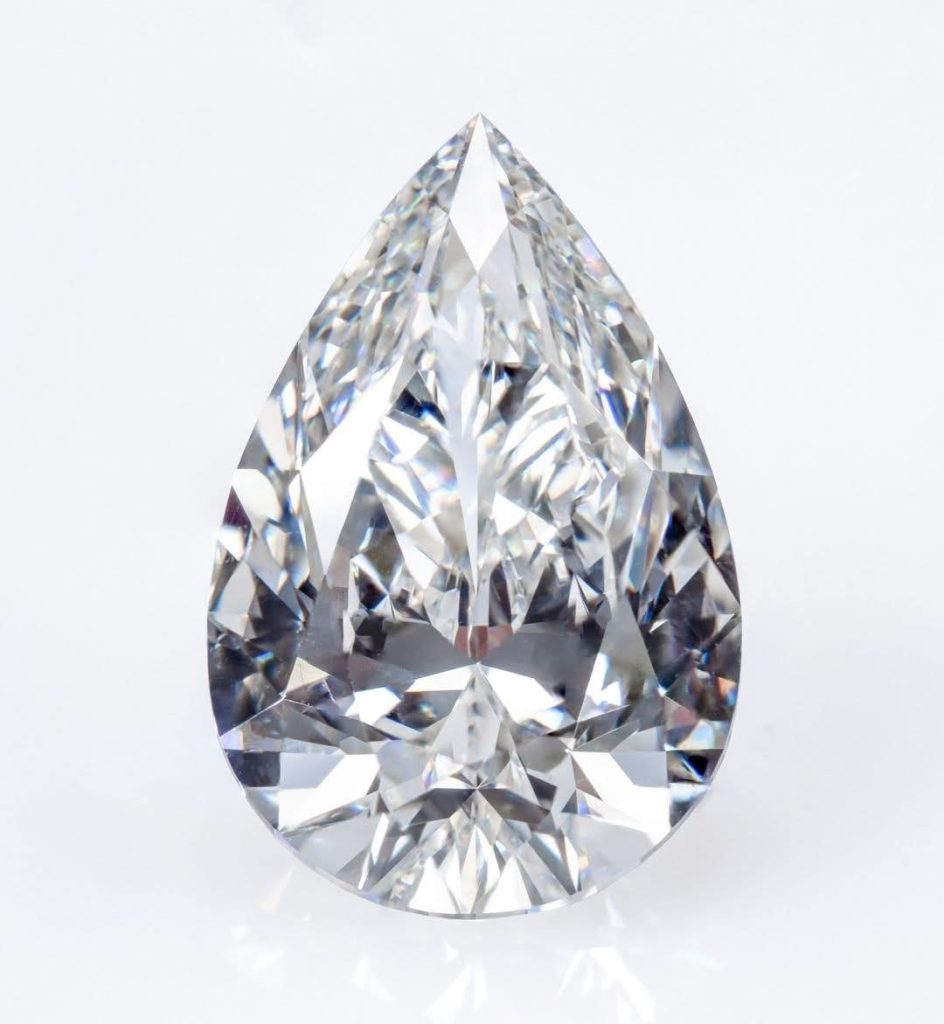
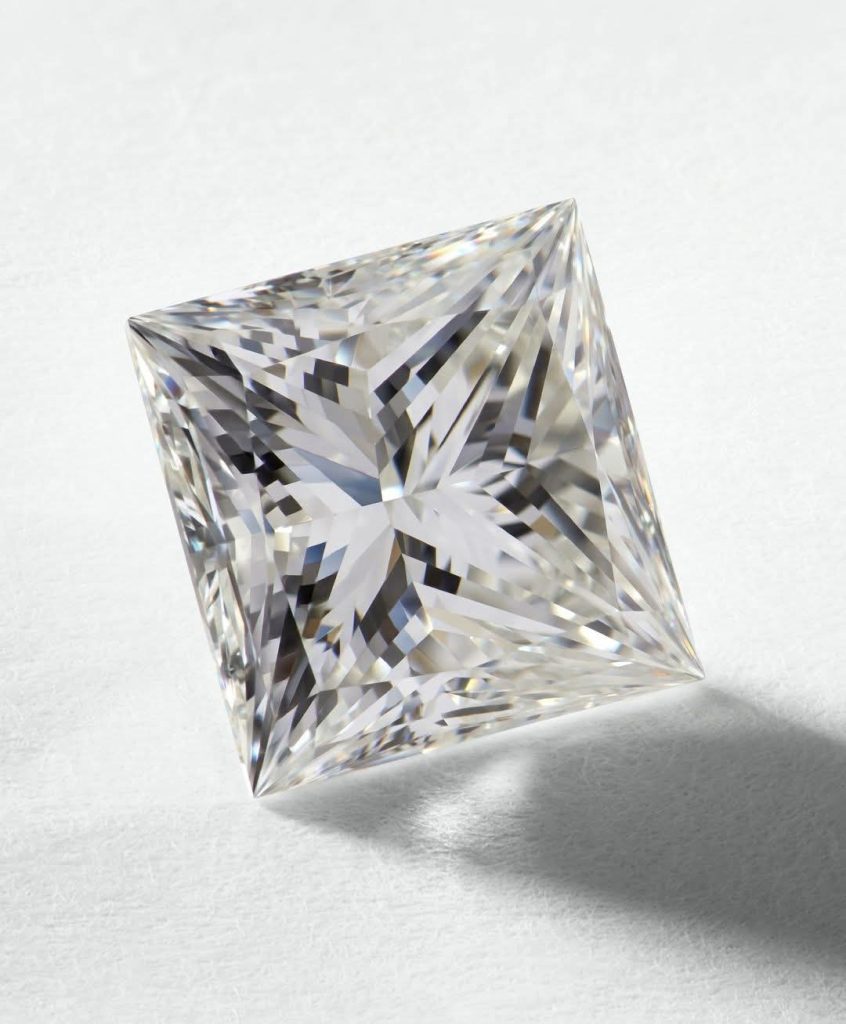
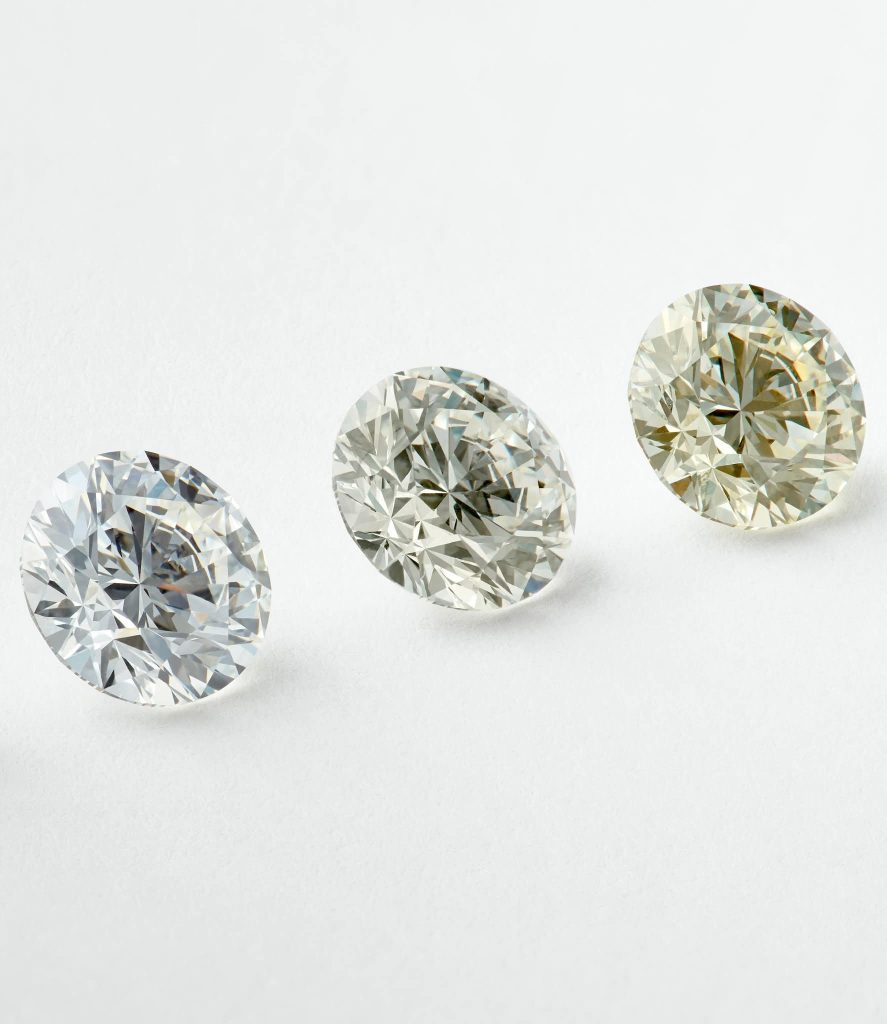
A diamond’s colour is graded with a colour chart; the colour scale goes from D all the way to Z. Starting with D, it is the best, meaning it’s colourless. The colour of a diamond is referring to how much colour is actually in a diamond, the less colour the more expensive the diamond will be. White diamonds are considered colourless; many diamonds will have a slightly yellowish, brownish or greyish colour and will cost less.
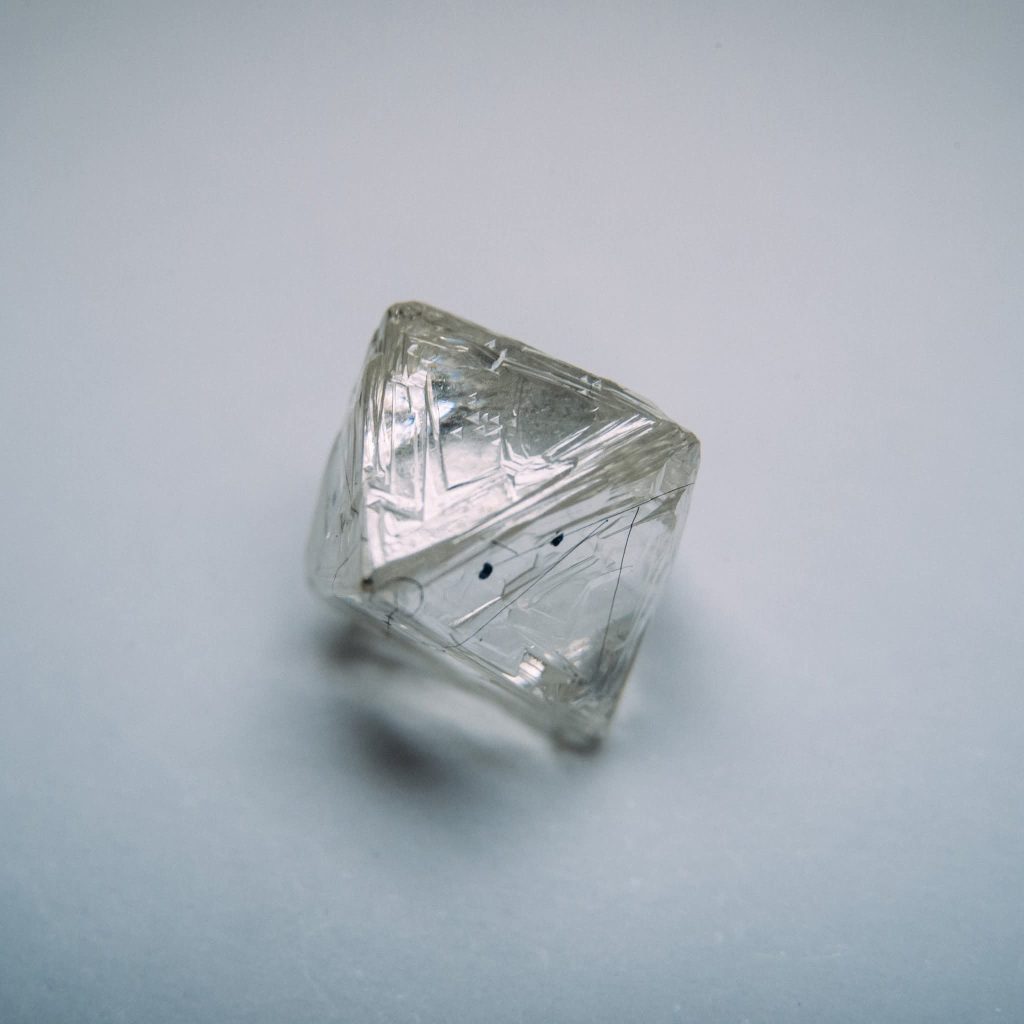
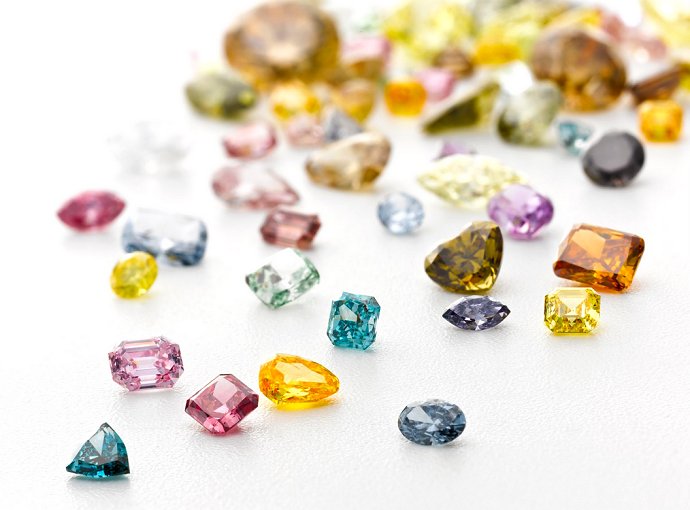
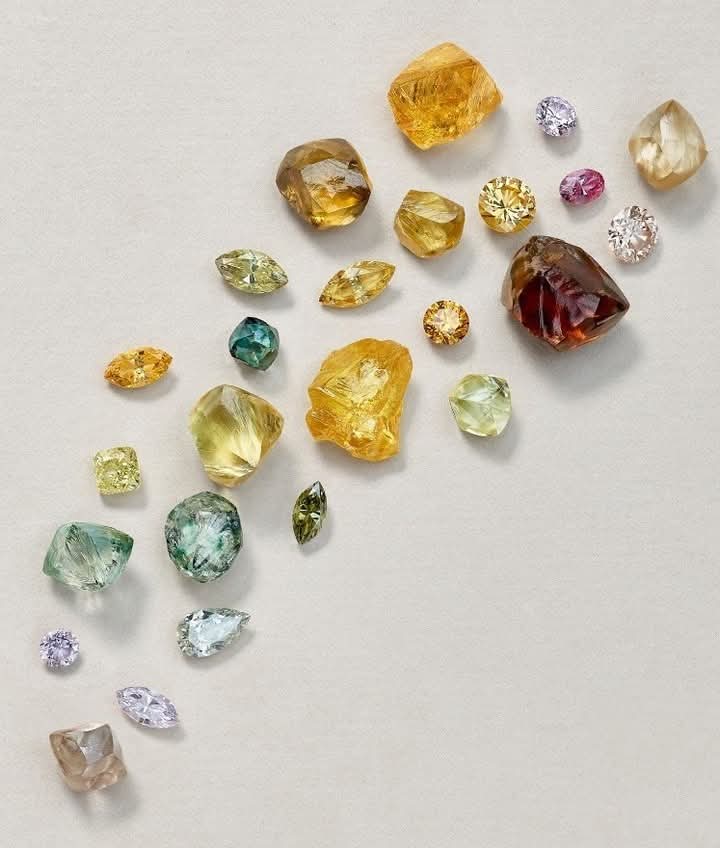
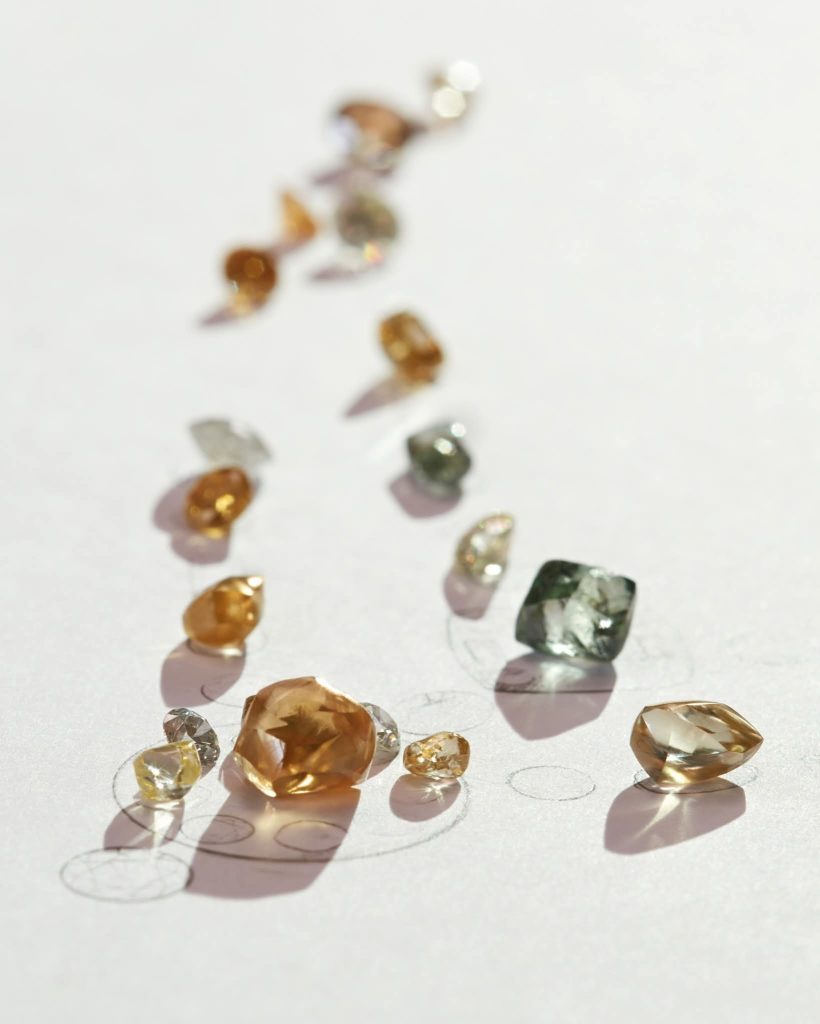
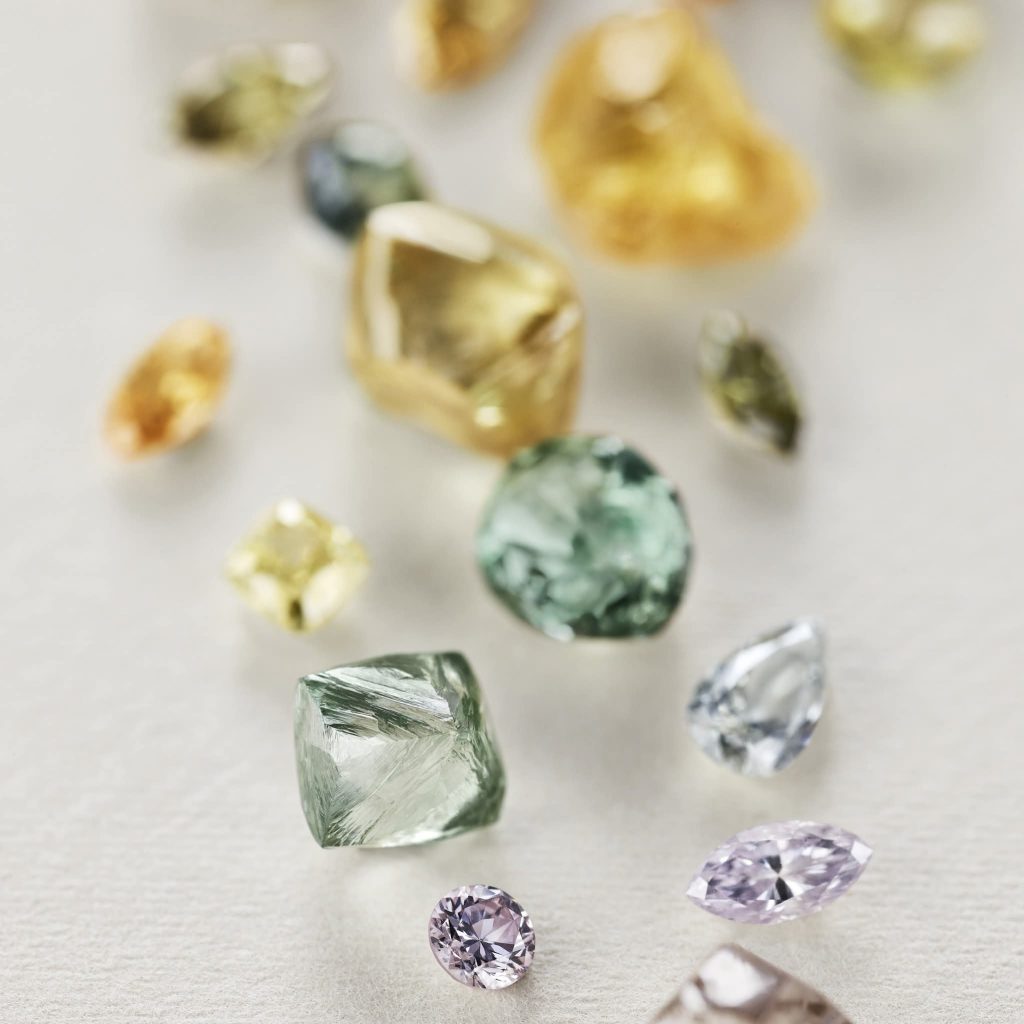
Diamonds can come in very different colours and these are called Fancy Colored Diamonds. Coloured diamonds are found in nature and in laboratory settings. According to the GIA; only one in 10,000 natural diamonds is a coloured diamond outside the D to Z grading spectrum. Coloured diamonds can be found in almost any shade of the rainbow.
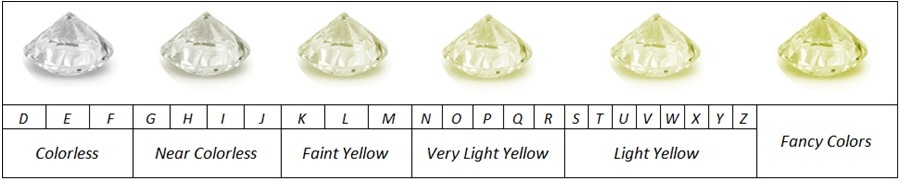
The GIA lists 27 different hues for natural coloured diamonds. Even a one-carat diamond requires billions of carbon atoms to bond, and all those atoms must be carbon to create a colourless diamond. The slightest quirk creates a coloured diamond. The fancy colour scale is used to grade coloured diamonds. It describes the colour of fancy diamonds in these ways: pure spectral colours of diamond (hue) lightness and darkness of the hue (tone) and the colours strength and purity on a scale from neutral to vivid (saturation).
Natural radiation and pressure can intensify the diamond’s colour.
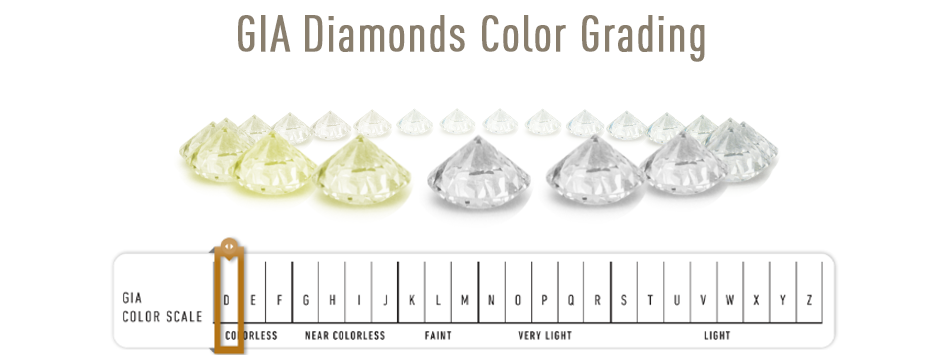
Colour Master Sets
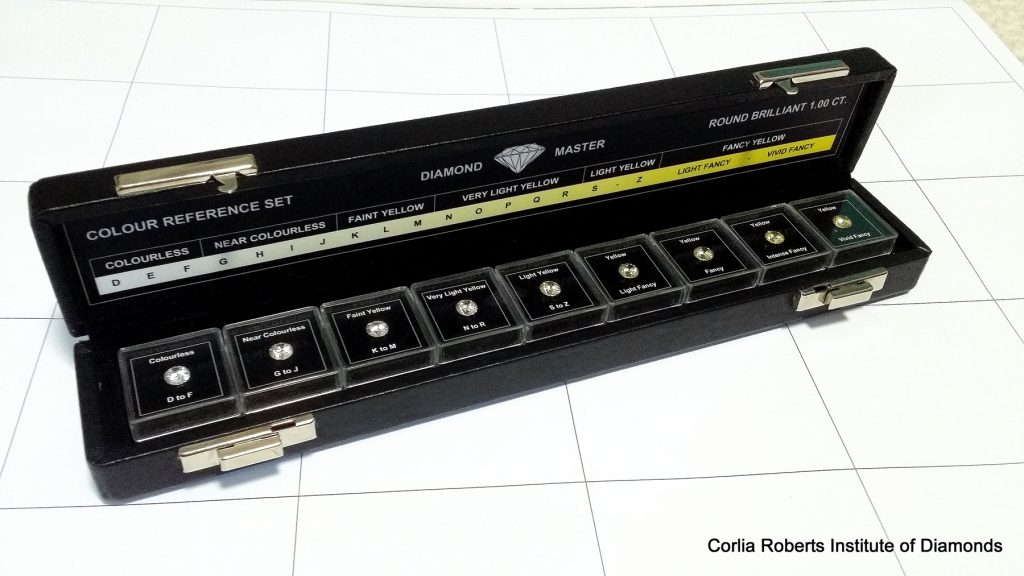
When grading a diamond, professionals compare it with different stones in the master set. First, they identify the two master stones between which the test stone’s colour lies. One is lighter than the test stone, the other darker. They then assign the test stone the colour grade of the lighter master stone.
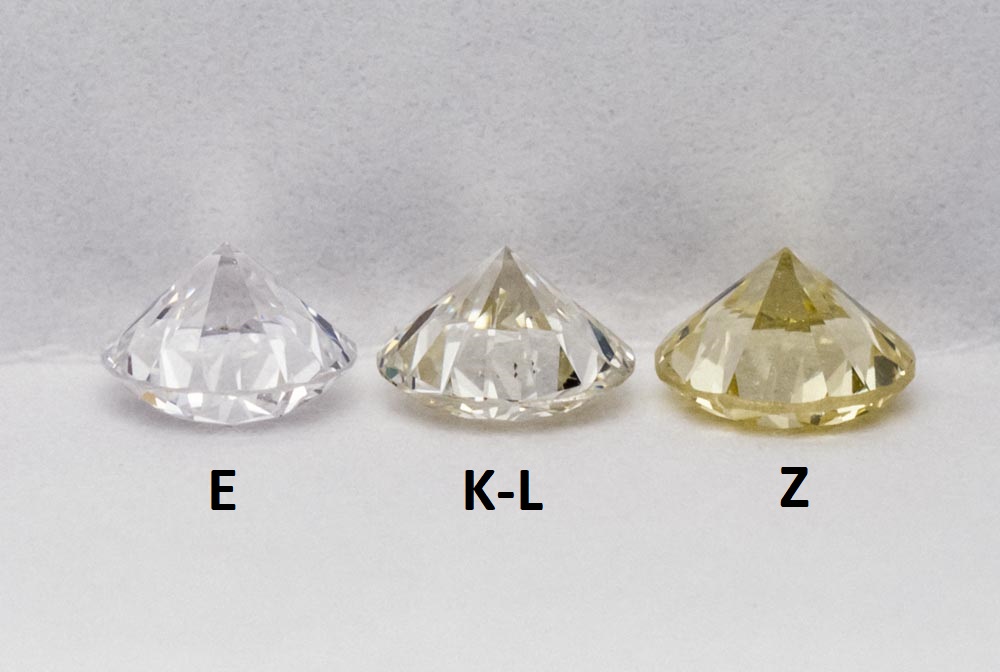
For example, if a test diamond’s colour lies between G and H, it’s a G colour stone. (G is lighter than H). Remember that the master stone shows the lightest possible colour for its grade. (G has many slightly darker gradations before the colour reaches H).
Table (Face Down) when evaluating diamonds in the normal colour range, professionals place the stones table or face down. They do this because the colour looks more concentrated through the pavilion, and graders look for a lack of colour in these diamonds. In contrast, they grade fancy coloured diamonds table or face up. In these stones, graders look for a maximum amount of colour.
White Light and Neutral Colours
The master set diamonds sit in a white tray shaped like an angular trough that can rock backwards and forwards. The white tray itself sits in a grey lightbox that shines white light on the diamonds. Neutral colours are always used during diamond grading because diamonds reflect the colours around them. So when grading diamonds one should avoid wearing red, yellow, blue, or other bright colours as it will throw off the accuracy of the grade.
Red Diamonds
Red diamonds are the rarest diamond colour and the most expensive diamond colour.
Red shades are thought to be due to changes to the electron structure during the diamond’s voyage to the surface. Red diamonds are so rare that only around twenty to thirty true red diamonds are known to exist and most are less than half a carat in size.
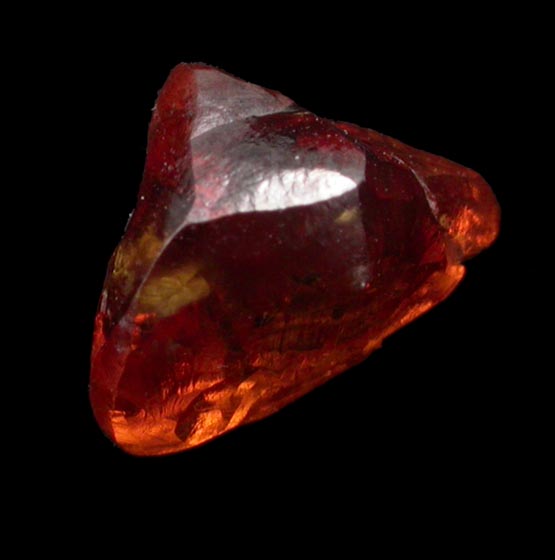
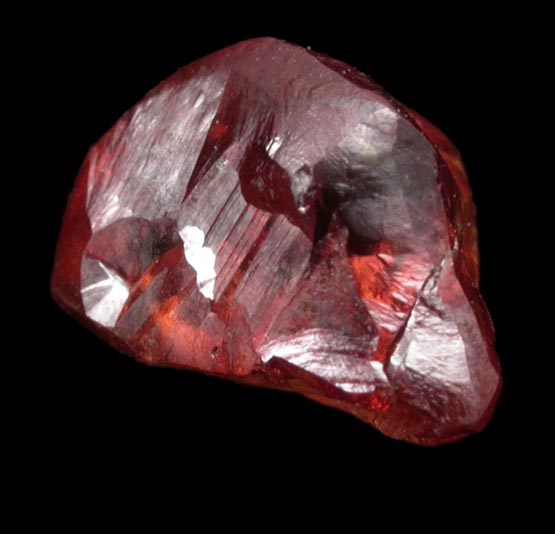
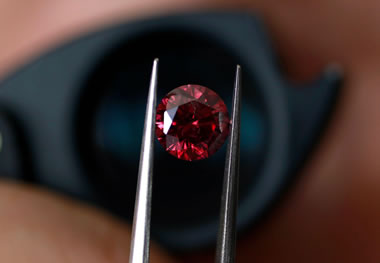
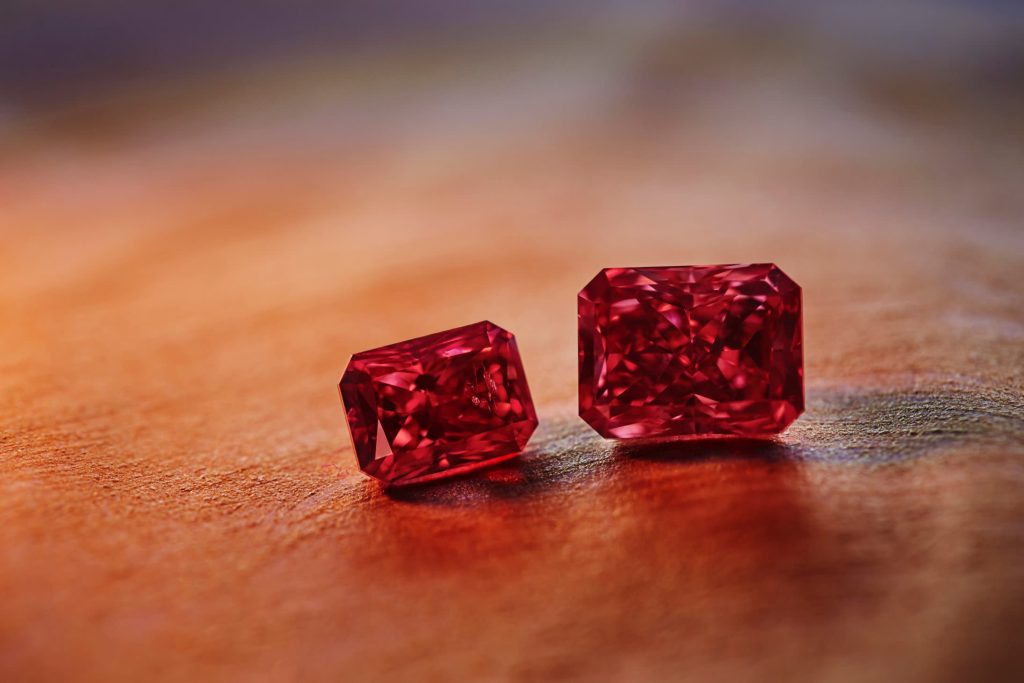
When a red diamond is retrieved from underground and light is allowed to pass through the irregular lattice, the unusual bending of the light causes the diamonds to reflect a ruby-like colour.
Red diamonds look different in various lighting environments. They look best in daylight and candlelight and they look worst in fluorescent light. Blue-coloured diamonds display the exact opposite properties in these different lighting conditions.
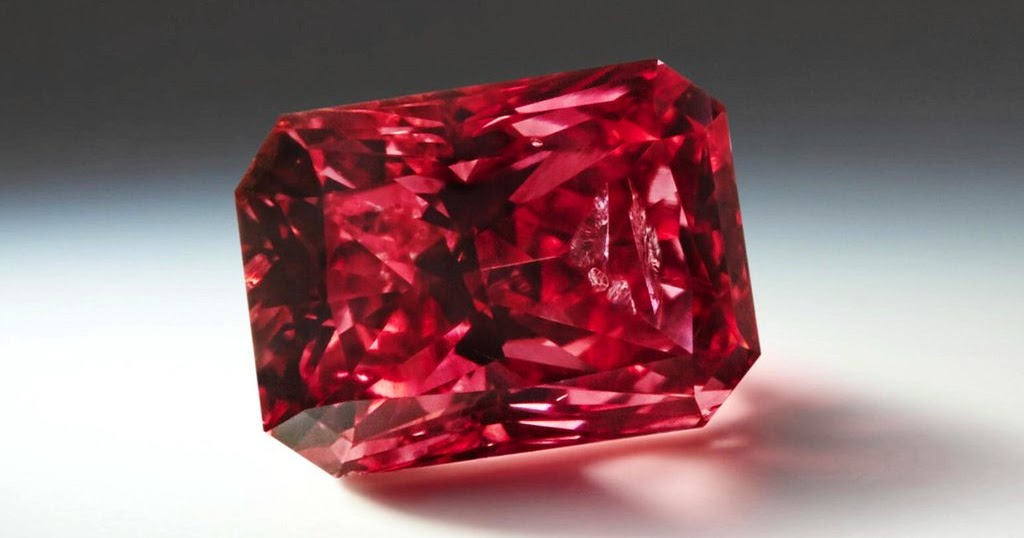
Natural fancy red diamonds are graded by the intensity of their colour and range from dark pink to purplish red.
The stronger the hue, the greater the value of the diamond.
Today, the price for a natural fancy red diamond rarely starts under $100 000 for anything above 0.20ct.
Orange Diamonds
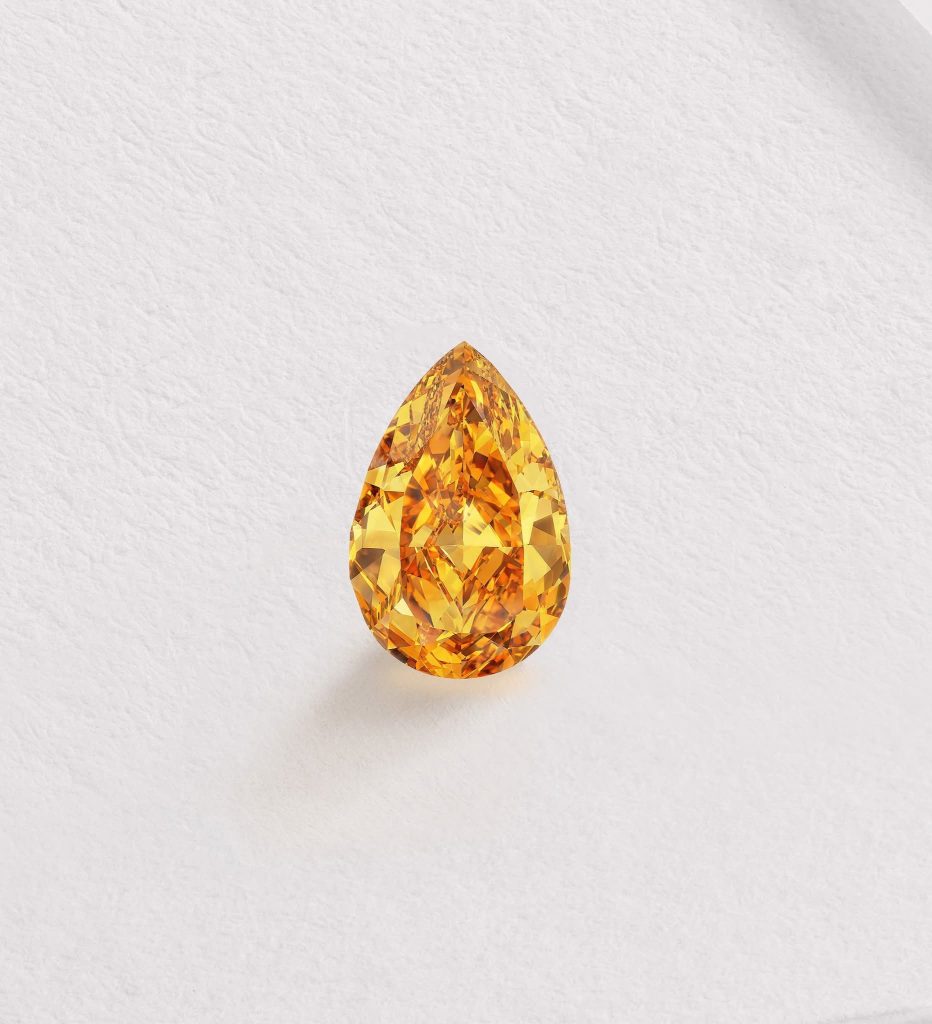
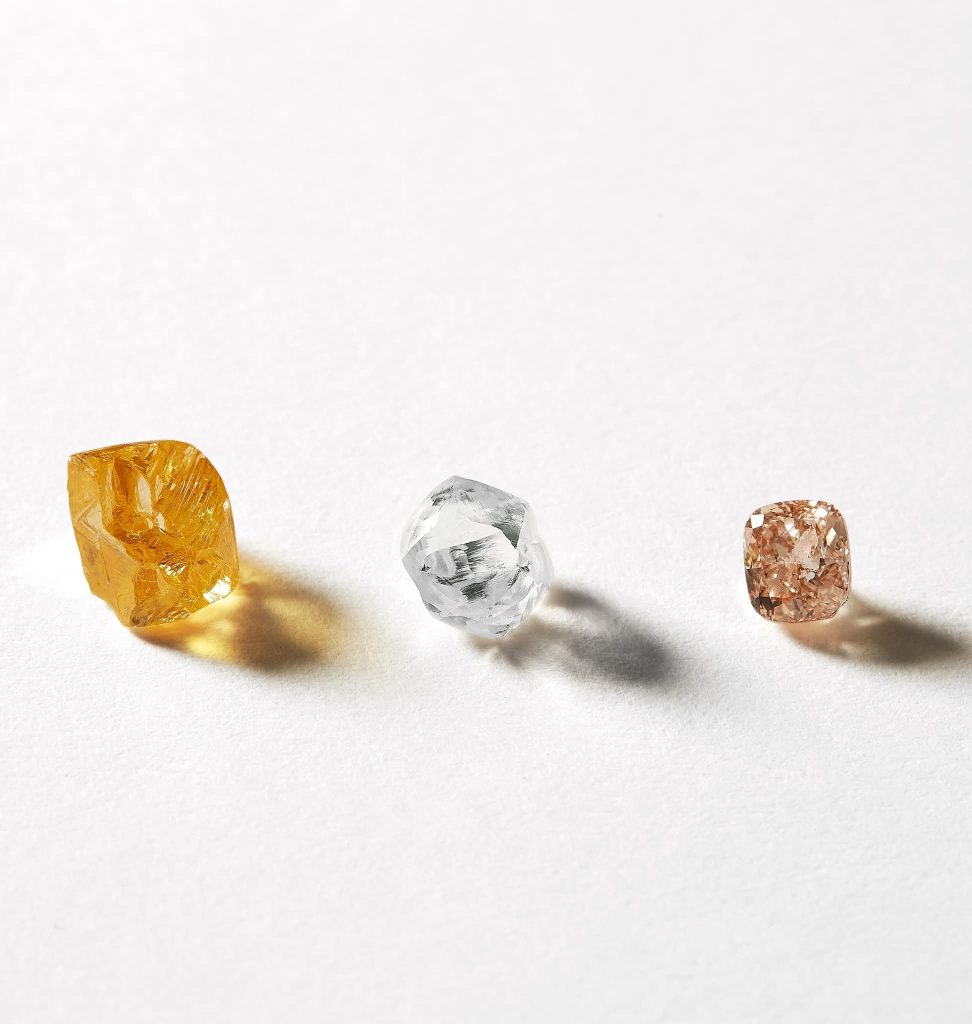
Orange diamonds are without a doubt among the most cherished coloured stones in existence, meaning that any time one is discovered or offered on auction, it generates substantial hype and interest from collectors. Nitrogen is suspected of being the modifier for orange diamonds. Fancy orange diamonds are some of nature’s most beautiful abnormalities. In fact, while an orangey tint isn’t as seldom seen as other hues, the GIA (Gemological Institute of America) rarely ever grades a stone as being pure orange.
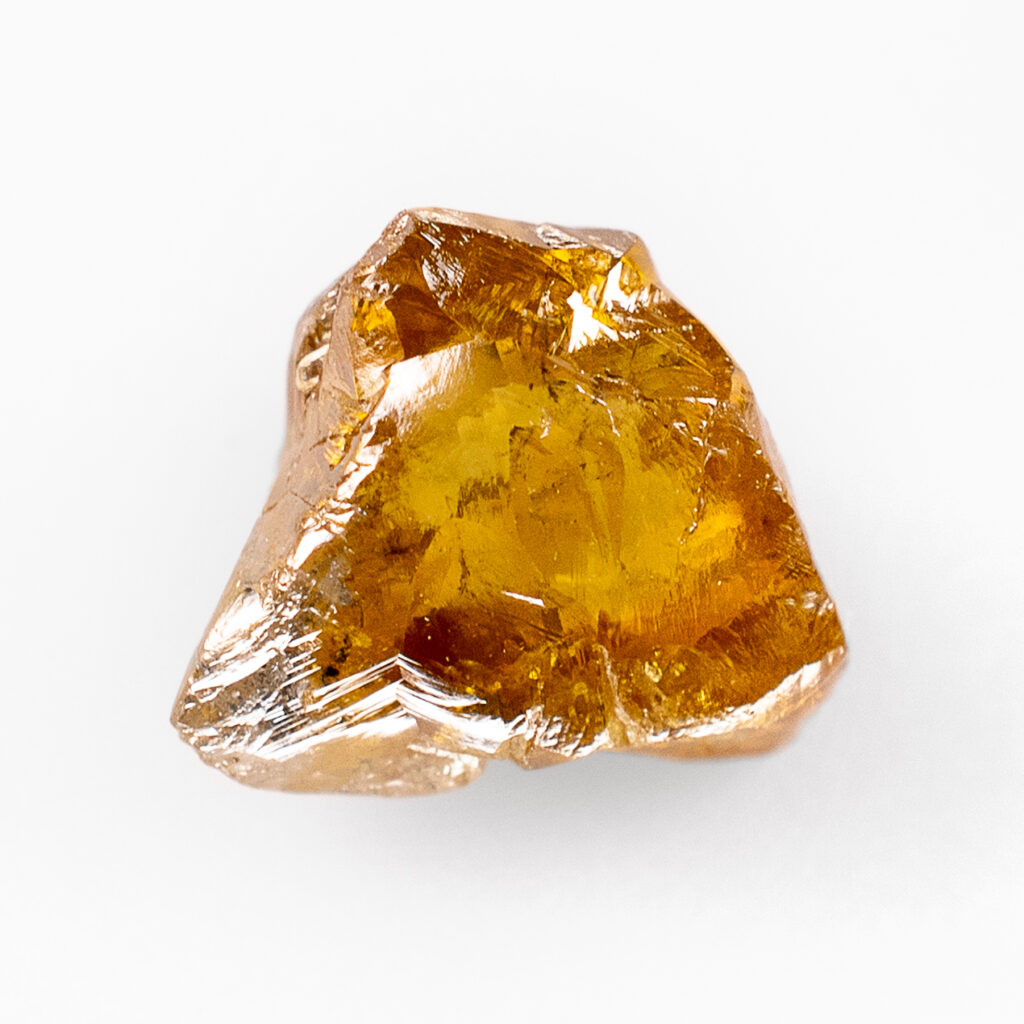
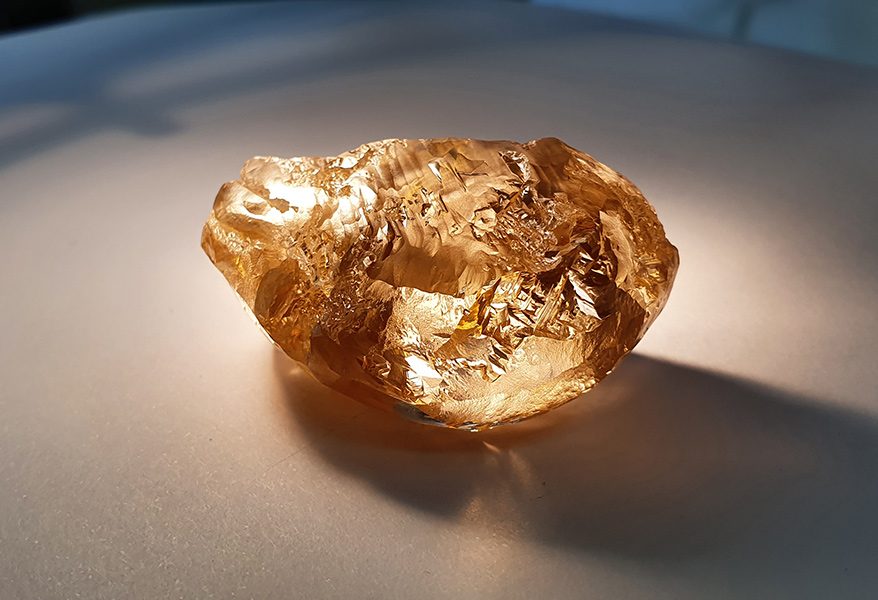
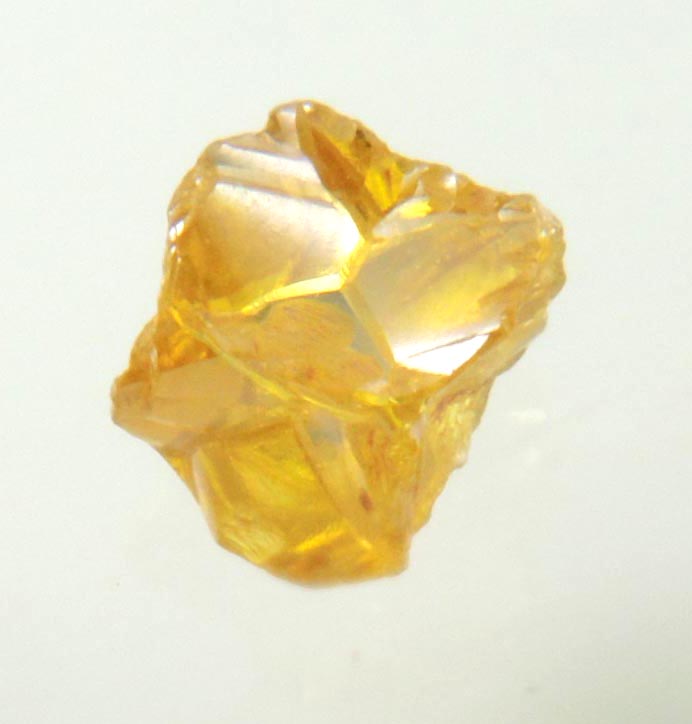
From bright citrus to warm amber, orange stones in a range of shades have captivated diamond enthusiasts for centuries. Both vibrant and dramatic, these gems are truly a collector’s dream. According to the Natural Colored Diamond Association, nitrogen atoms must be grouped in a hyper-specific way while the diamond is forming. When they are situated in this particular arrangement, they absorb blue and some yellow light, thus producing an orange appearance.
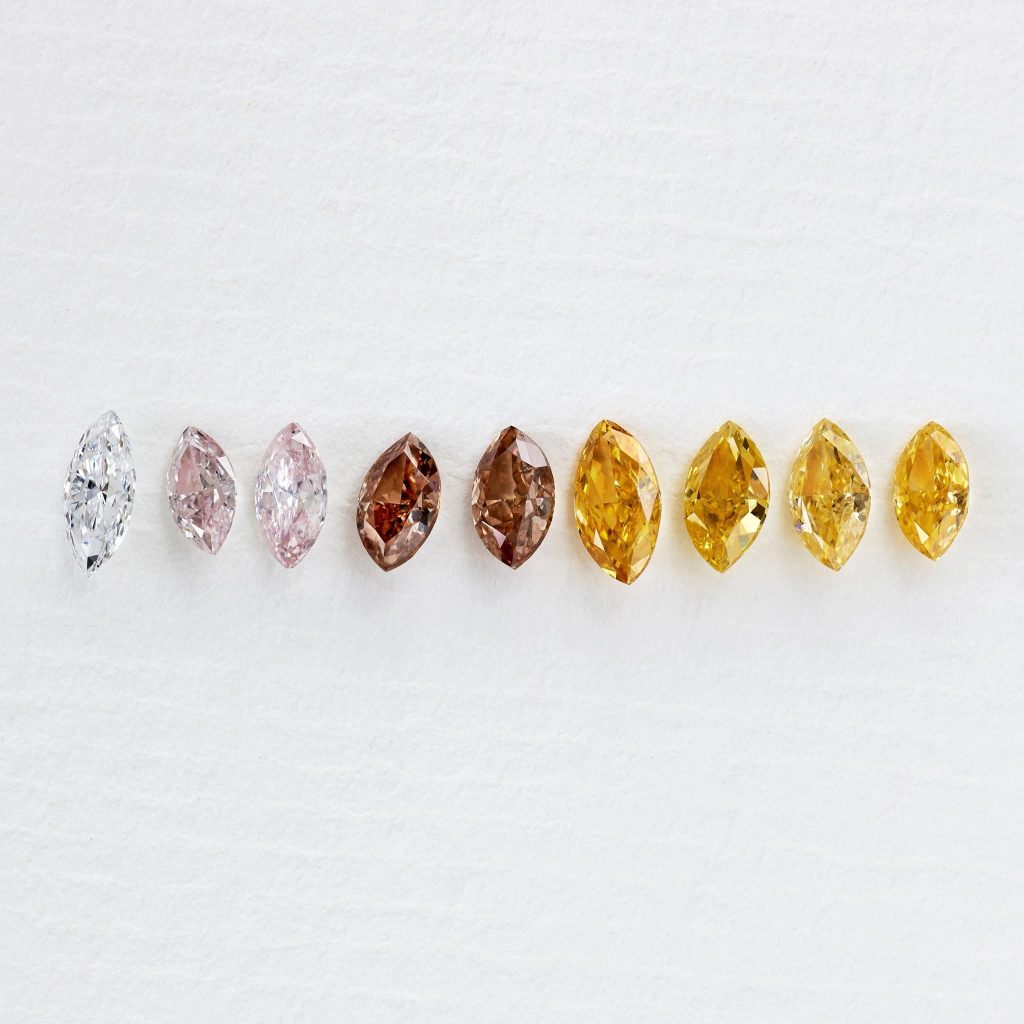
Typically these modifying colours are brown, yellow or pink (in which orange is the secondary colour). If the stone’s colour is less than 25 per cent orange, it will be deemed “orangy” instead. Orangy diamonds, diamonds the orange colour is secondary, are not difficult to come by in the market, but pure orange diamonds are quite rare.

The cost and desirability of orange diamonds depend largely on the intensity of their hue. In order of increasing rarity – as well as value – these stones may be graded faint orange, very light orange, light orange, fancy orange, fancy intense orange, fancy deep orange or fancy vivid orange.
A pure fancy vivid orange diamond or vivid orange with a slightly yellowish tone (i.e. vivid yellowish orange diamond) is sometimes referred to as a “pumpkin diamond”.
Yellow Diamonds
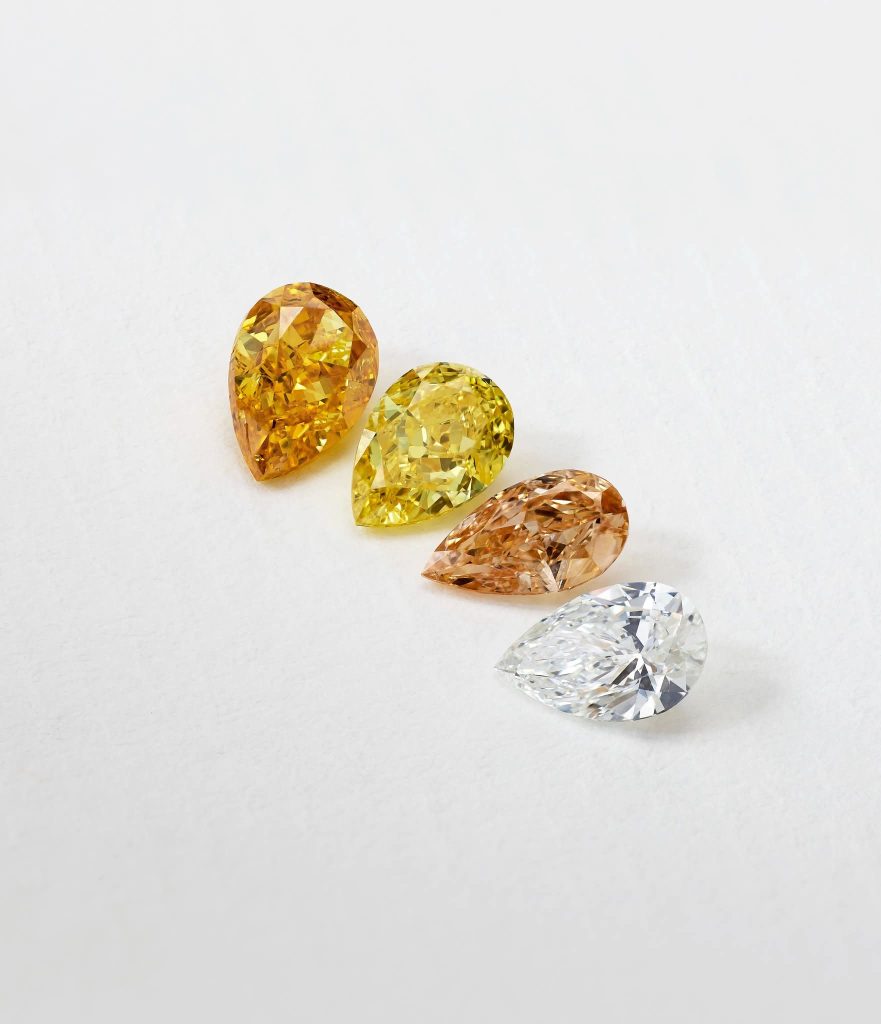
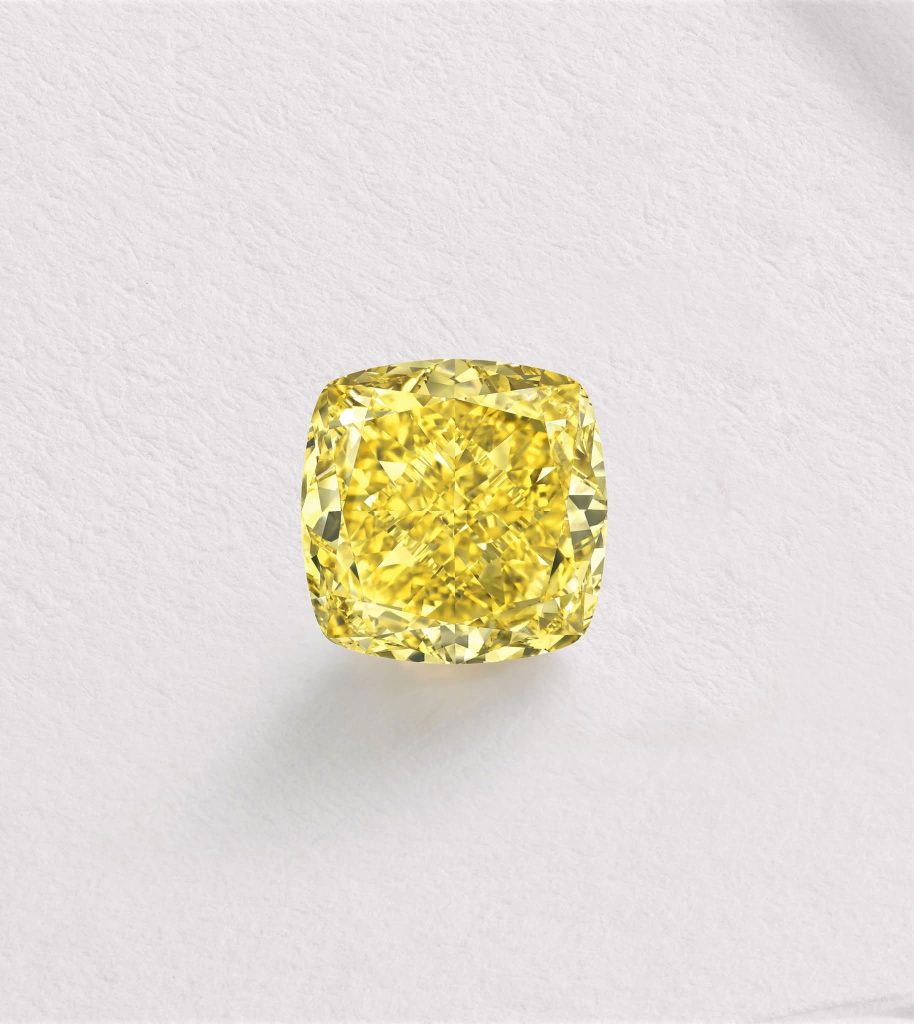
Yellow diamonds are very common, but the most “vivid yellow” diamonds are mined in South Africa. The yellow colour comes from inclusions of nitrogen; nitrogen atoms are similar enough to carbon atoms that they easily take carbon’s place in the formation process.
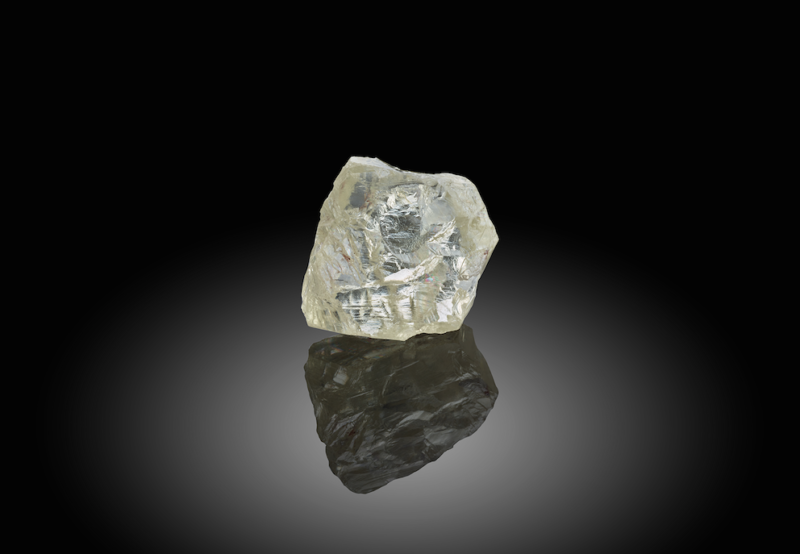
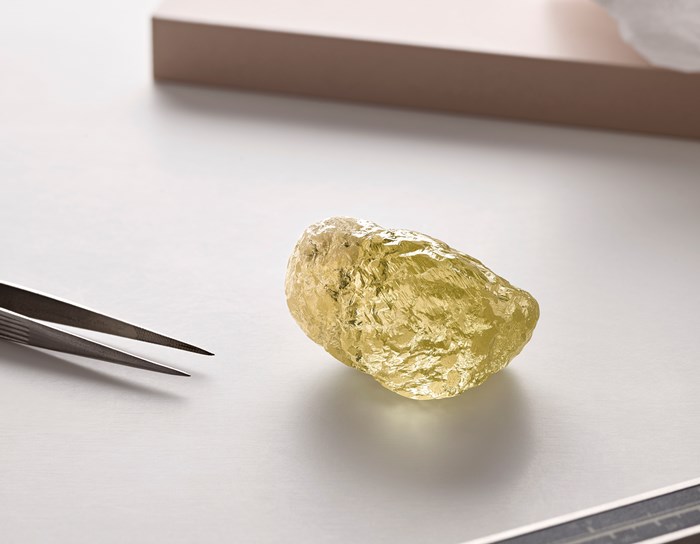
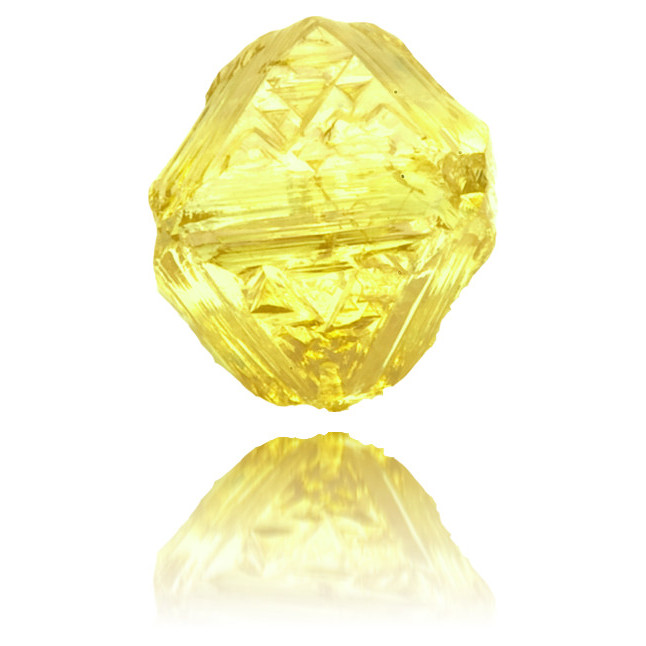
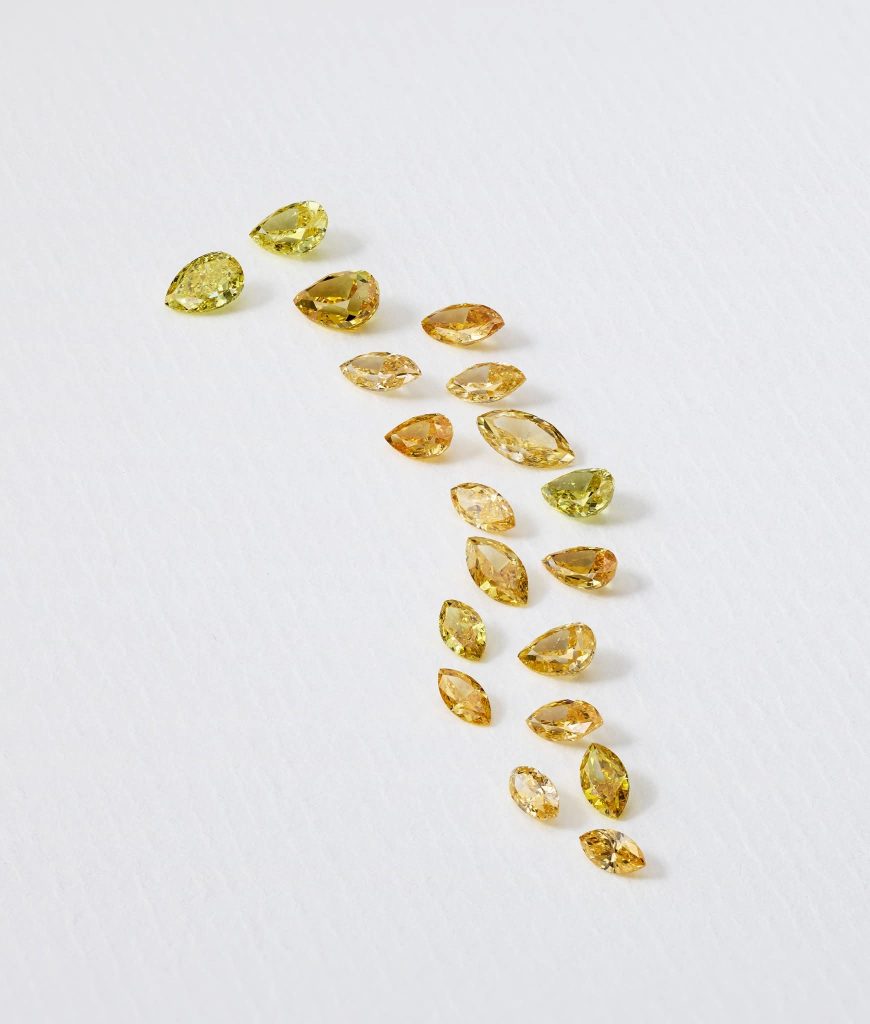
Yellow diamonds (like other coloured diamonds) often come in unique colour combinations. Colours often seen are brownish-yellow, orangy-yellow, greenish-yellow and more. In general, natural yellow diamonds with secondary hues are worth less than pure yellow diamonds.
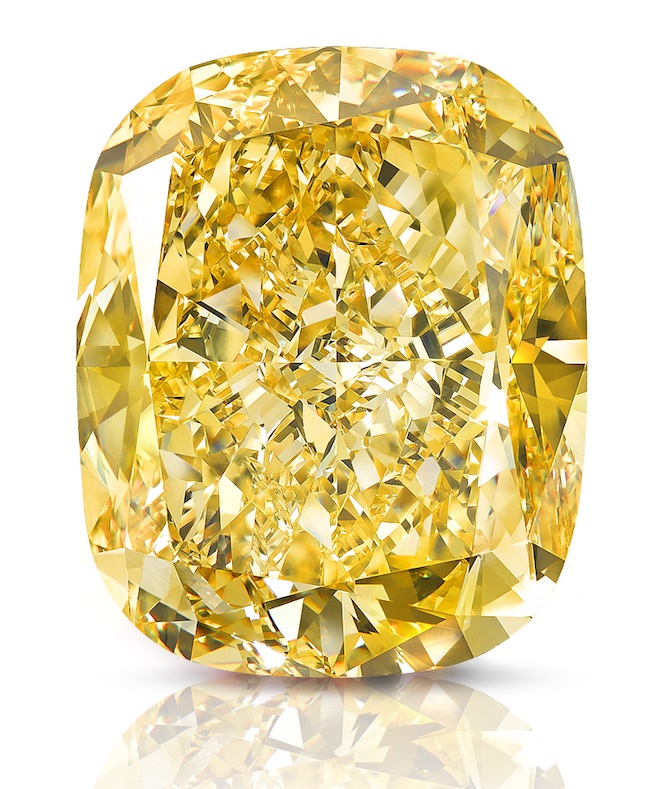
The name, Canary Diamond or Canary Yellow Diamond refers to pure yellow diamonds with a strong shade – meaning pure intense yellow diamonds. Keep in mind that while almost everyone knows what a canary diamond means, the GIA colour description would still state fancy yellow in the colour description and not canary.
Green Diamonds
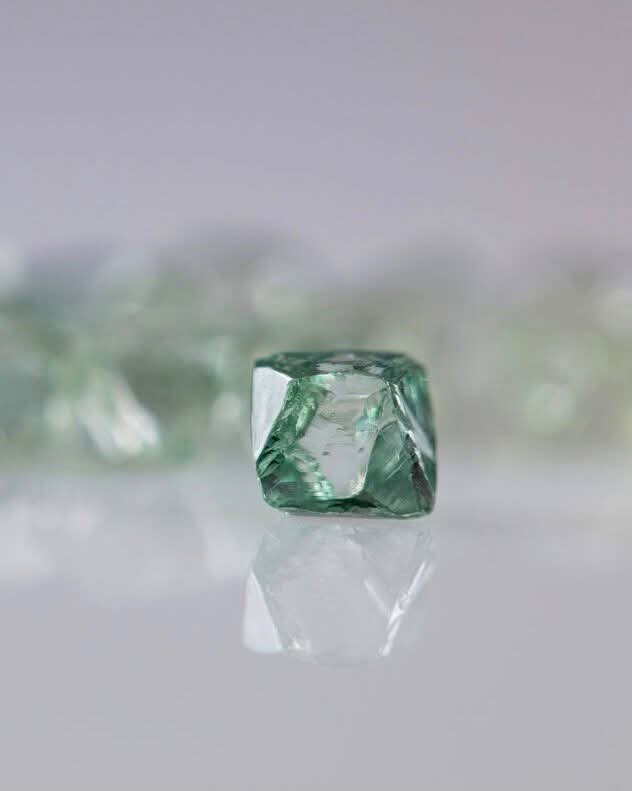
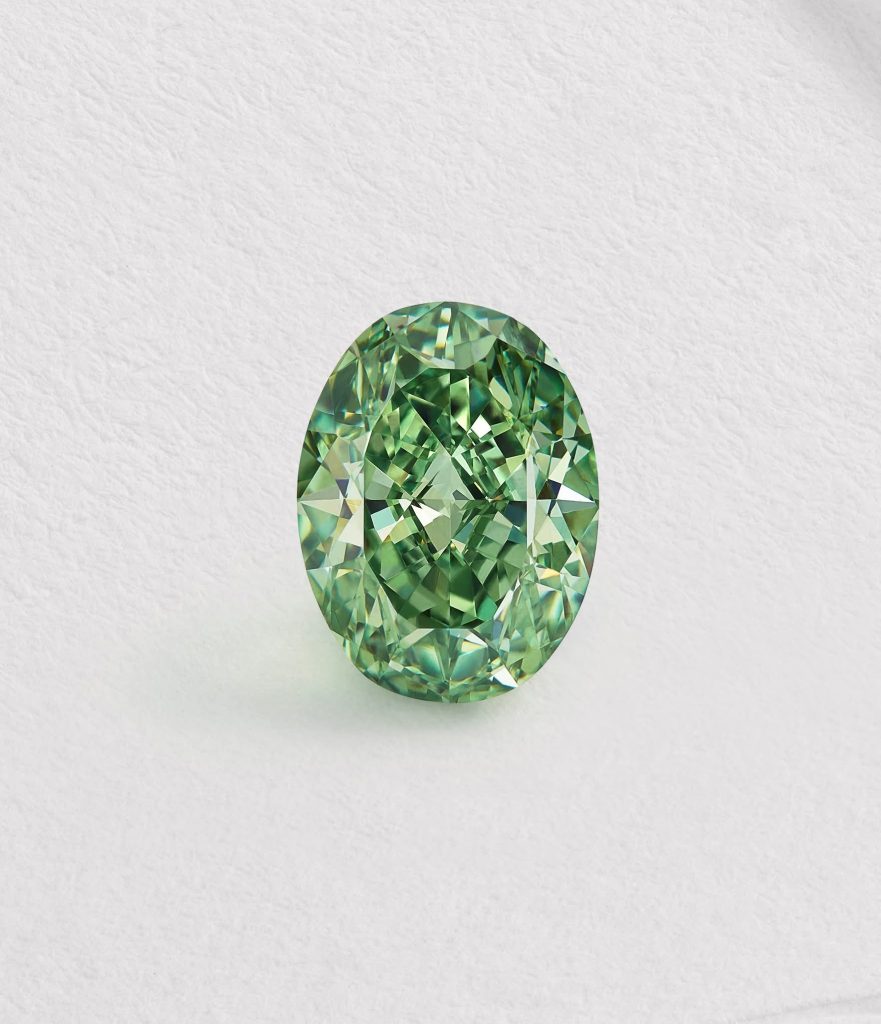
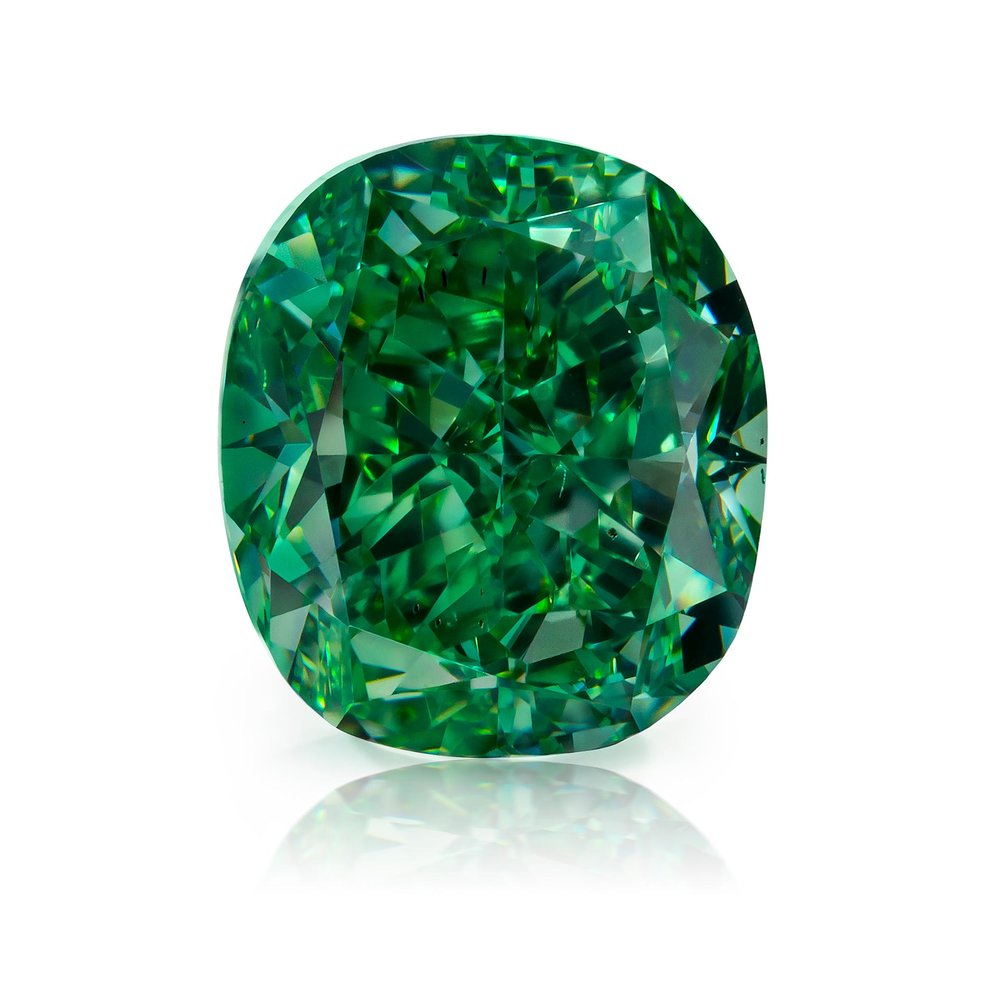
Natural green diamonds are very rare, with an estimated less than 10 coming onto the market each year. In many green diamonds, the colour is confined to a thin layer at the surface of the rough stone. The design and cut of the polished diamond must be carefully planned and executed to conserve as much of that original colour as possible. Even though the faceting might only preserve a band of green colour around the girdle and a small amount in the culet, that can be enough to produce an apparent green colour throughout the stone.
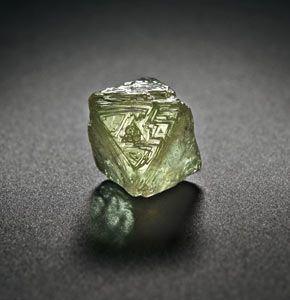
These diamonds often display a green colour which is very subtle. Most green diamonds have a colour that is modified by hints of yellow, blue, or grey. Variations in colour, tone, and saturation can make a big difference in the selling price of the gem. The most valuable green diamonds have a pure green colour, medium tone, and strong saturation.
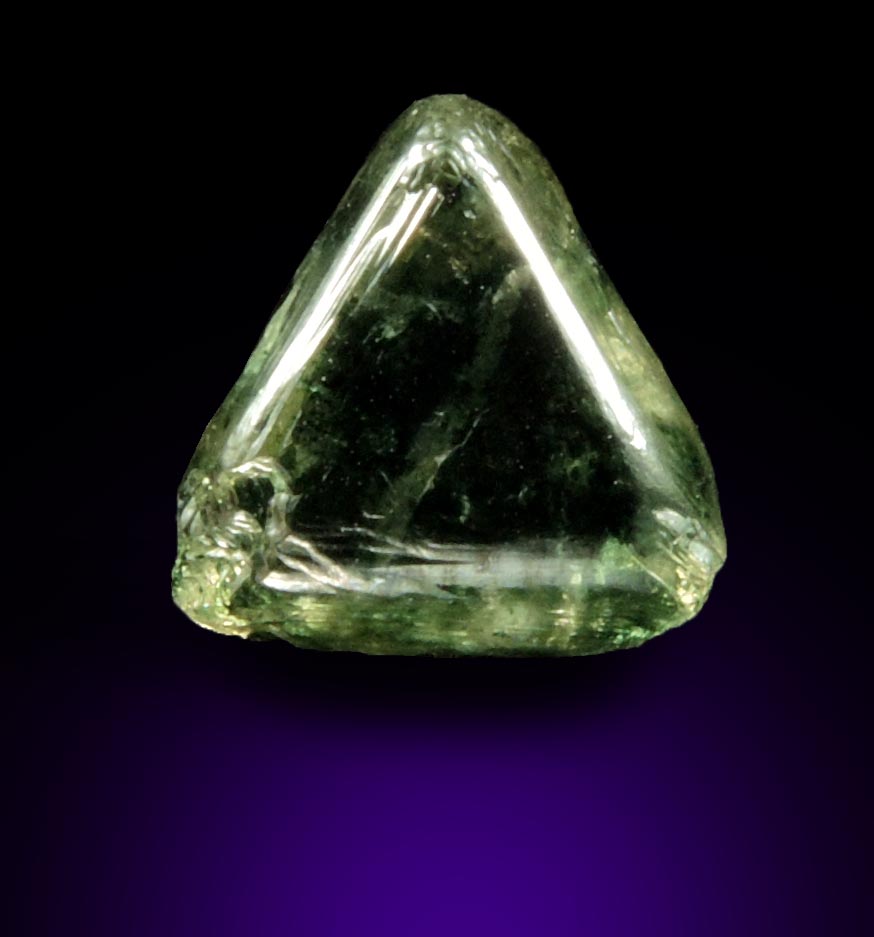
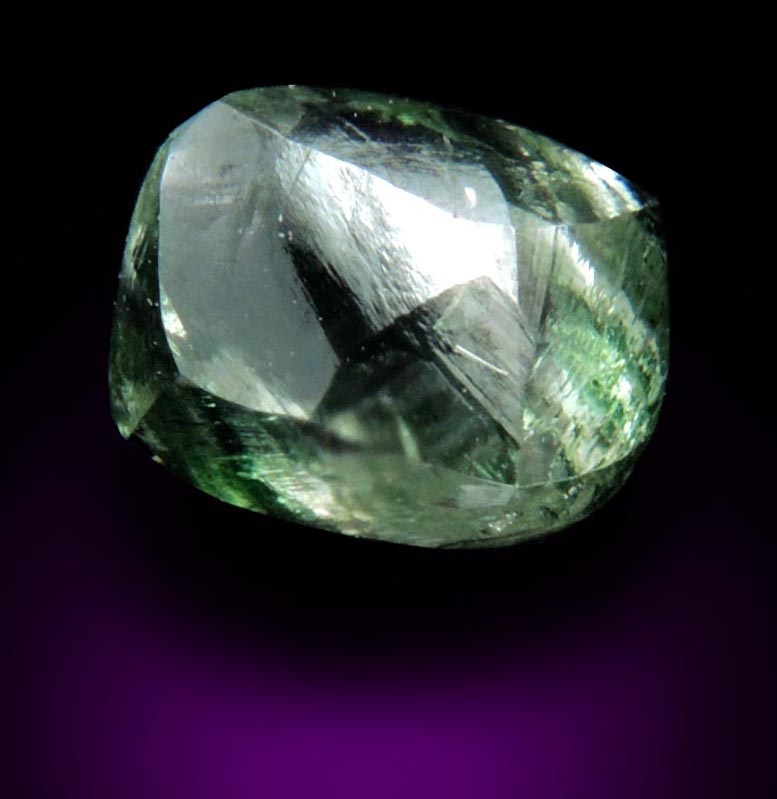
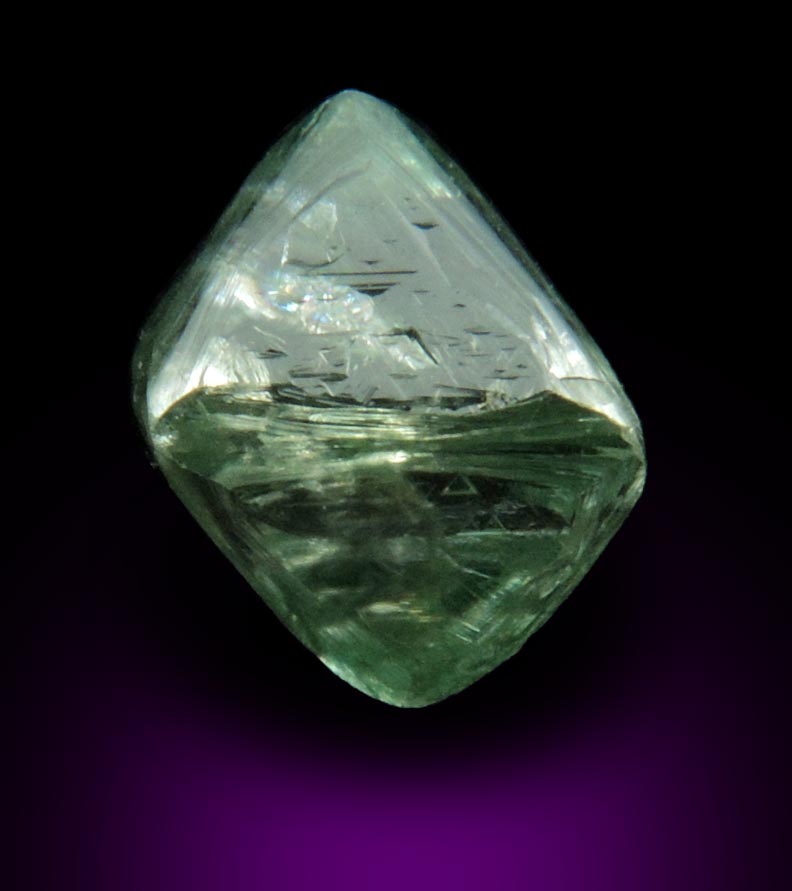
Diamonds with a natural green colour developed that colour while they were underground, in rocks that contained small amounts of radioactive material such as uranium or thorium. As the radioactive materials decayed, they emitted radiation that penetrated the nearby diamond crystal. When this type of radiation enters a diamond, it can knock electrons or carbon atoms out of their position in the crystal lattice. This alteration most strongly influences the outer layer of the diamond crystal. As a result, the green colour is often present as a shallow “skin” on the outside of the diamond crystal. Diamonds with uniform green colour throughout the stone are exceptionally rare.
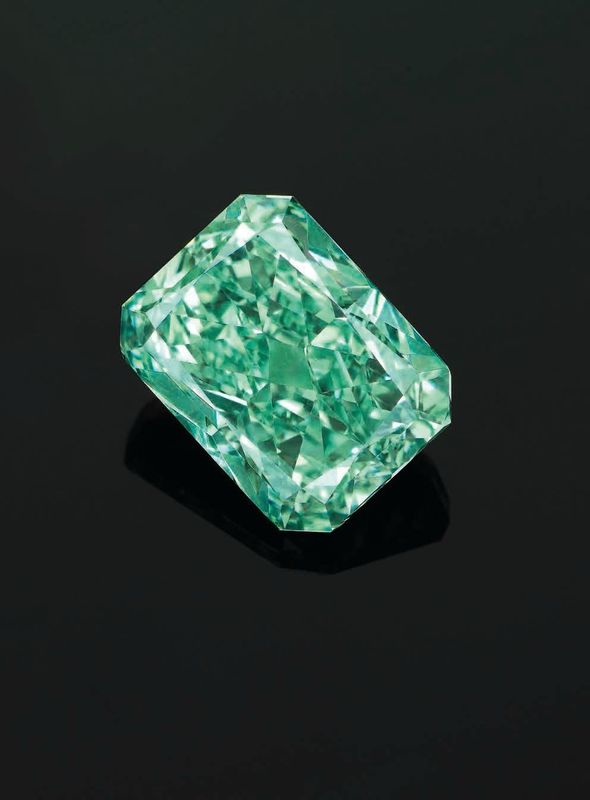
The displacement of electrons and carbon atoms deforms the crystal lattice and changes the way light travels through the diamond. The deformation causes the diamond crystal to selectively absorb much of the light entering the diamond and selectively transmit wavelengths in the green portion of the spectrum. This green light travels to the eye of the observer and gives the diamond a green appearance.
The green colour from natural irradiation is the most common cause of the green colour in diamonds. However, the green colour can also be caused by structural defects in the diamond’s crystal structure, caused by the presence of nitrogen, hydrogen or nickel atoms.
Treated Green Diamonds
The first documented treatment to produce green diamonds was an experiment done by Antoine-Henri Becquerel, shortly after his discovery of radioactivity in 1896. He irradiated some diamonds to see if they would be altered, and their colour changed to green.
In 1904, Sir William Crookes stored a few polished diamonds in radioactive salts. When they were removed from the salt, the diamonds had a green colour at the surface and that colour extended to a shallow depth. This method of diamond treatment is not used today because the diamonds can be contaminated with radioactivity that does not decay to safe levels within a reasonable period of time.
The most common laboratory treatment used today to produce a green colour in diamonds is the irradiation of polished diamonds with a low-energy electron beam. This treatment has been used since the late 1940s, and it can modify near-colourless or yellow diamonds to produce diamonds with a green colour.
Another treatment to produce green diamonds today is to apply a thin coating of silica to the surface of the polished gems. The coating can produce an attractive appearance, but it is very thin and can eventually be worn off by the abrasion of normal wear.
Diamonds that owe their green colour to treatment should always be sold with a disclosure that the colour was produced by the treatment, and state the method of treatment. Because so many buyers prefer diamonds with a natural colour, green diamonds coloured by treatment generally sell for a significantly lower price than natural green diamonds of similar colour, size and quality.
Blue Diamonds
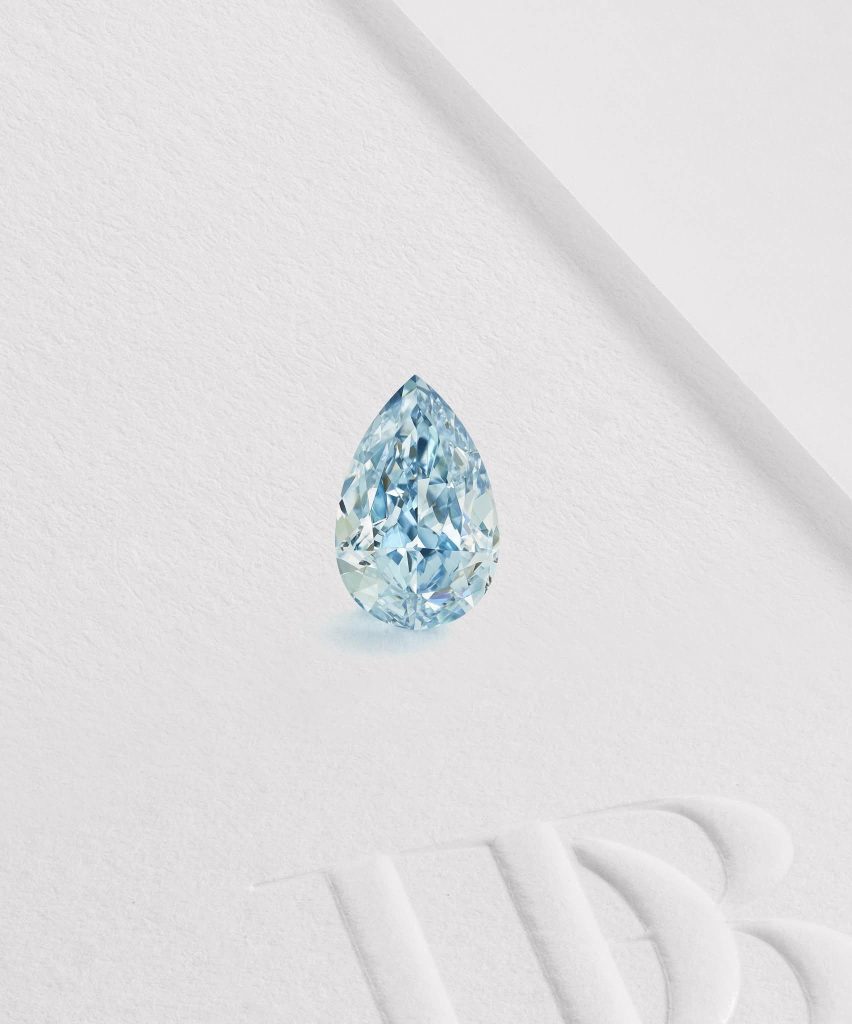
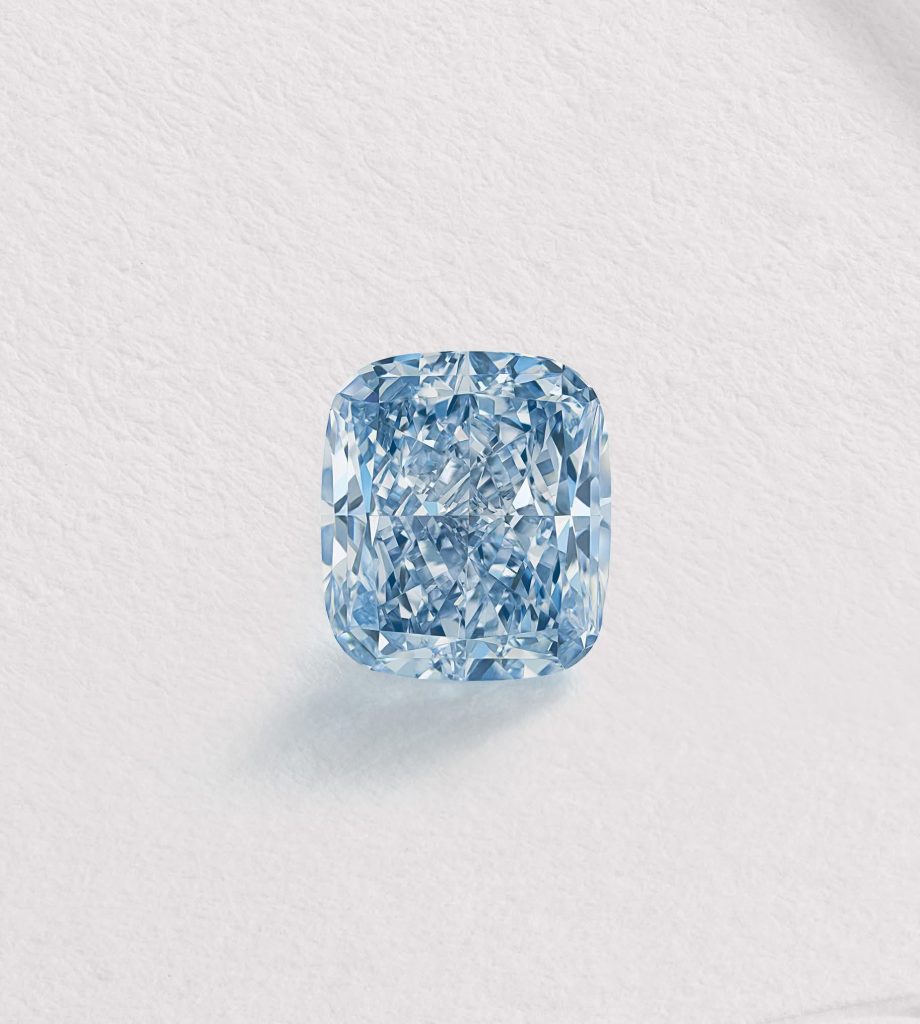
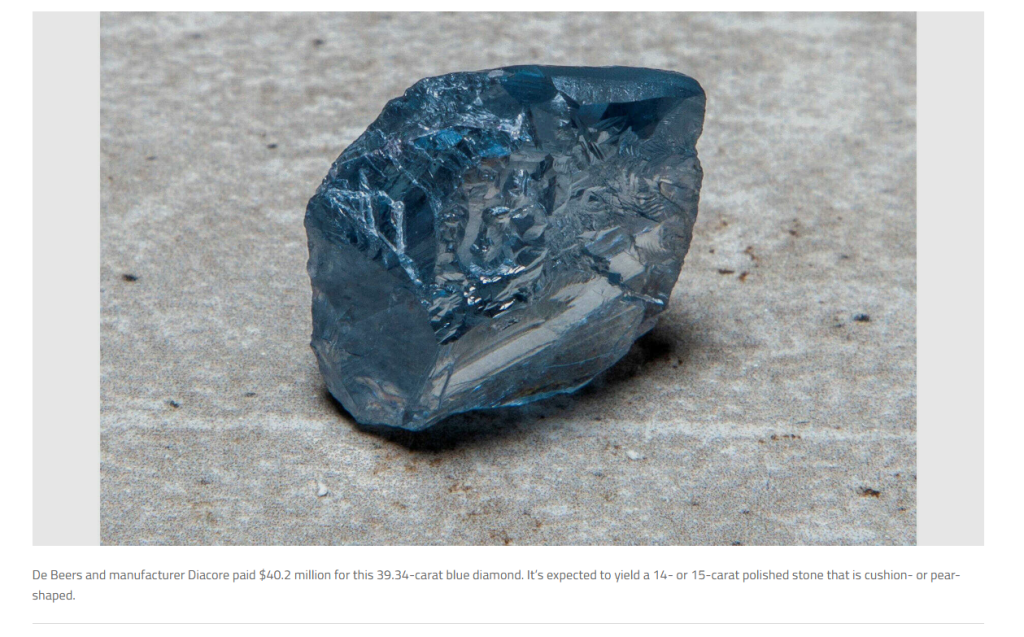
Boron is another element that is similar in size to carbon and can easily be found in trace amounts in a diamond. Diamonds with naturally blue colour are extremely rare, and they usually have very few mineral inclusions. Their rare colour and their high clarity make them extremely valuable gems. Only a few mines produce blue diamonds, and those mines normally produce just a few blue diamonds in any given year. Their blue colour is usually caused by trace amounts of boron in the diamond crystal lattice.
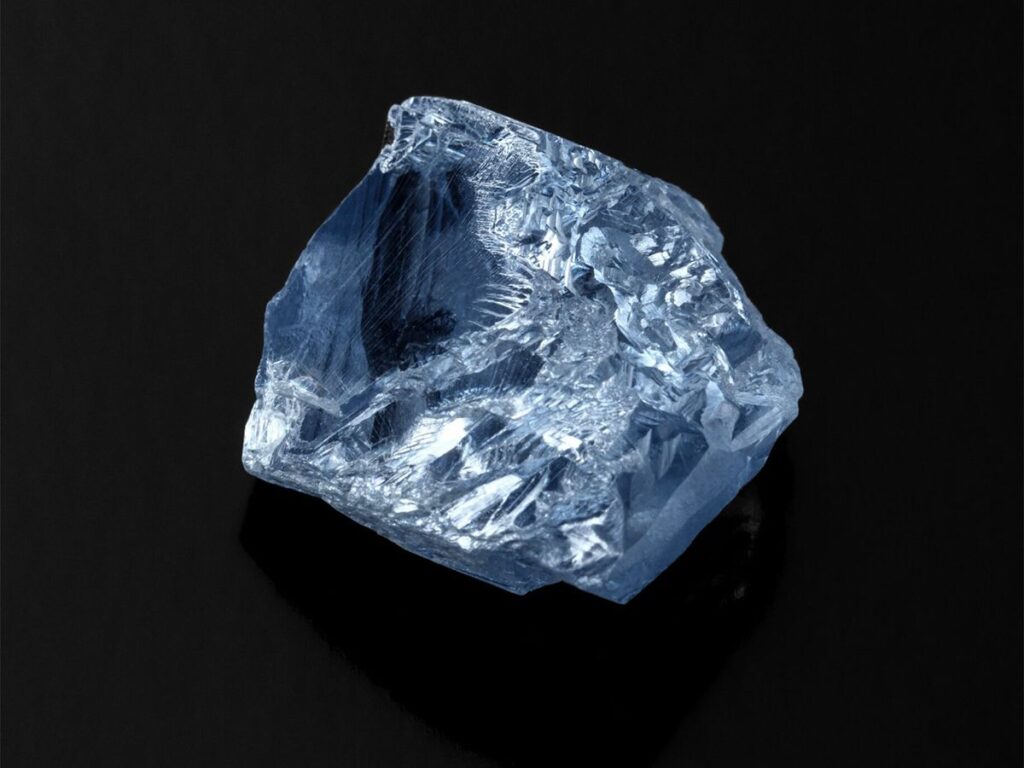
Other blue diamonds are unrelated to boron; nickel of high concentration and hydrogen are the hypothetical cause of blue colour in other diamonds. The most notable mine for blue diamonds is the Cullinan Mine, in South Africa. A diamond composed entirely of carbon atoms, without impurities or defects will be colourless. Defects in the diamond crystal lattice are what cause coloured diamonds. Causes of defects include: A) other elements substituting for carbon; B) vacancies in the diamond crystal lattice caused by missing carbon atoms; C) particles of non-diamond mineral matter included in the diamond.
Blue body colour in natural diamonds is most often caused when a small number of boron atoms substitute for carbon atoms in the diamond crystal lattice. This rarely occurs because boron is usually not present where natural diamonds form in the deep Earth environment. A large amount of boron is not required to produce a blue colour in a diamond. A boron concentration of only one part per million can be enough to produce a blue colour. The more boron that substitutes for carbon, the stronger the blue colour.
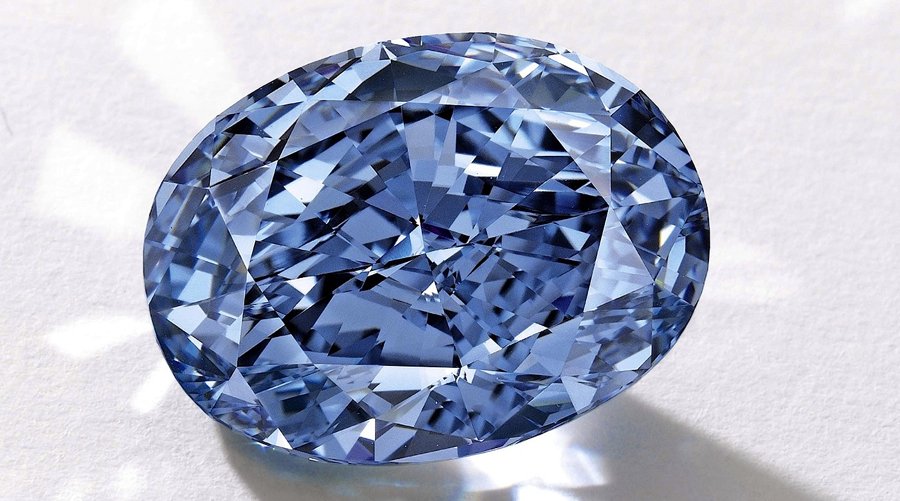
Boron is one of just a few elements that have atoms small enough to enter the diamond crystal lattice and substitute for a carbon atom. But the boron atom is not a perfect fit; it has one less available electron than carbon. When boron substitutes for carbon in the diamond crystal lattice, the electron deficiency causes a defect in the diamond crystal structure. This defect changes how light passes through the diamond crystal. It causes the diamond to selectively absorb light in the red portion of the visible spectrum and selectively transmit light in the blue portion of the visible spectrum. When the transmitted light reaches the eye of a human observer, the observer sees a blue diamond.
The presence of boron in a diamond does not guarantee a blue colour. Small amounts of nitrogen in the diamond can produce defects that reduce the impact of boron-induced colour. Diamonds with a rich blue colour must contain very little nitrogen. Boron also does not guarantee a blue colour. Blue colour can also be associated with radiation exposure and hydrogen-related defects.
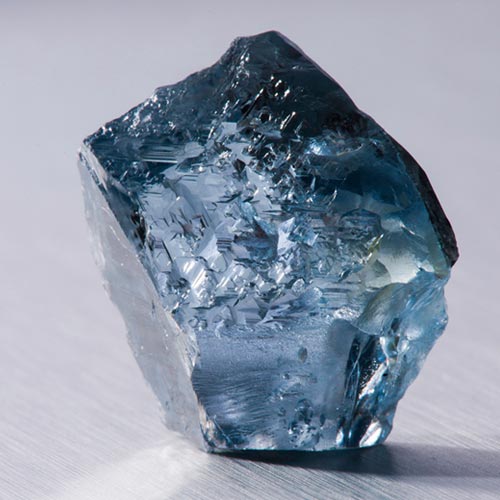
For decades geologists have believed that virtually all diamonds found at the Earth’s surface formed from mantle materials at a depth of about 100 to 150 kilometres below the Earth’s surface. Then in 2018, a team of researchers surprised almost everyone when they found a number of blue diamonds that formed at pressures equivalent to depths of at least 410 to 660 kilometres and contained inclusions that could only have been derived from materials in the oceanic crust.
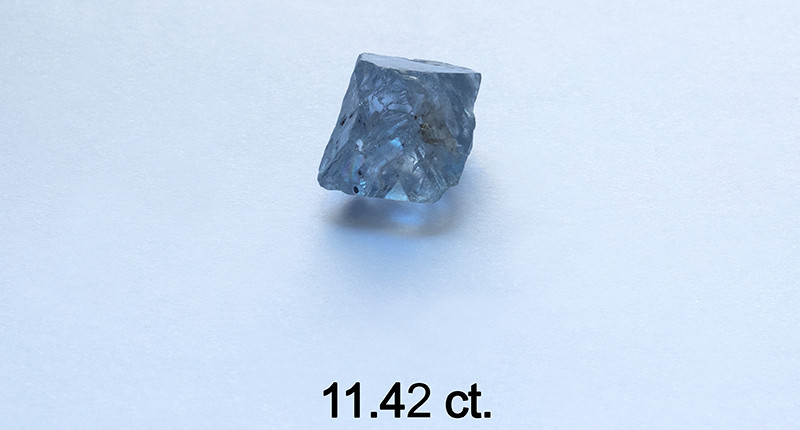
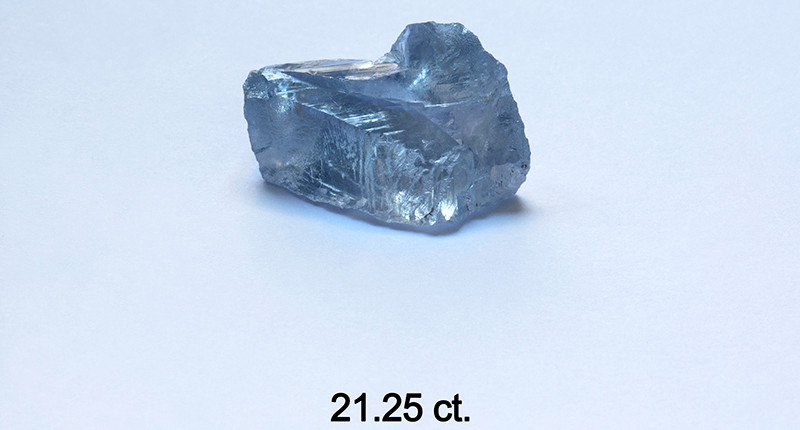
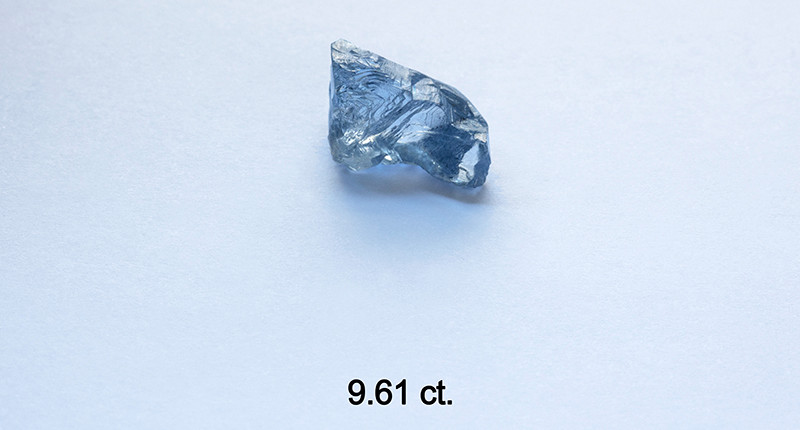
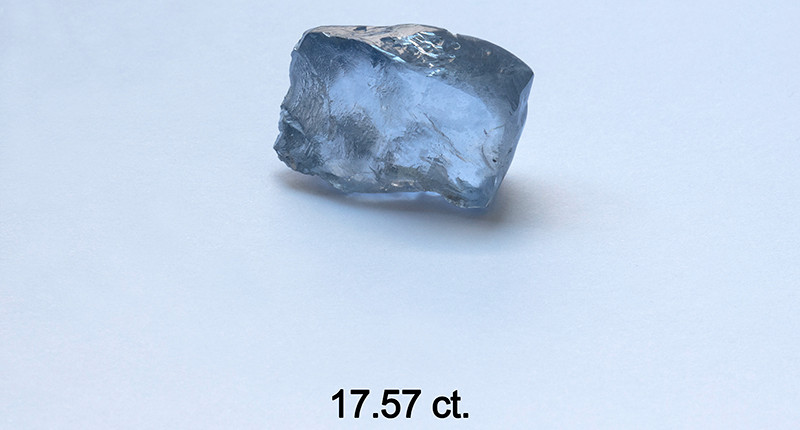
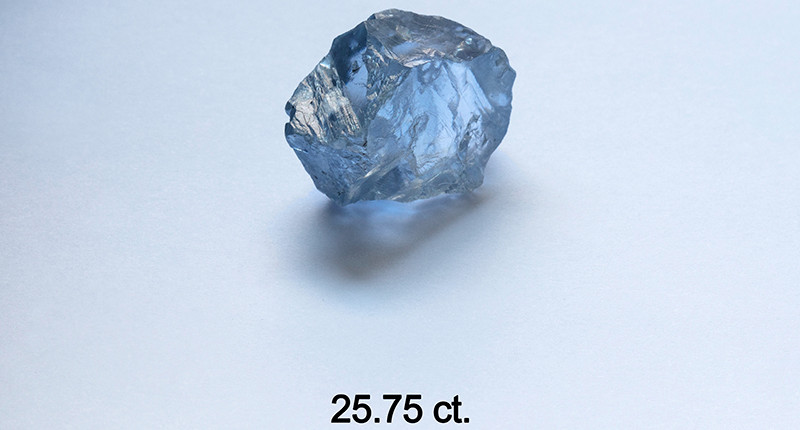
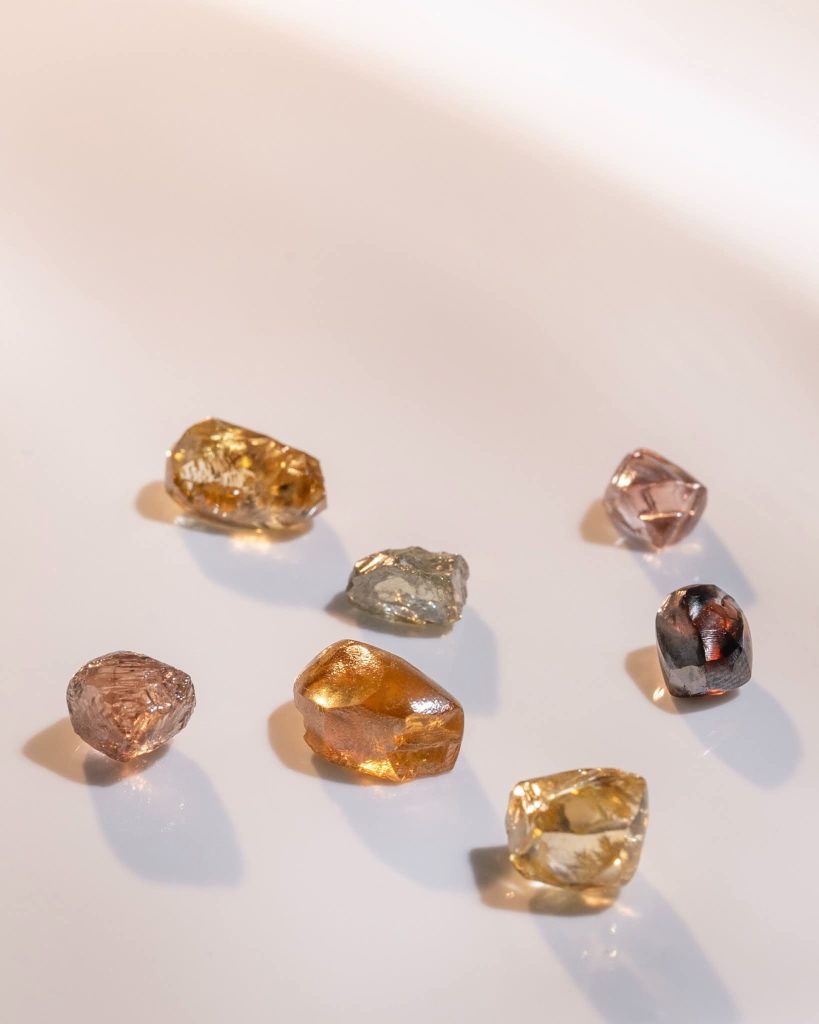
The Letlapa Tala Collection by Petra
These diamonds were remarkable because 1) They formed four times deeper than previously expected; 2) Inclusions in the diamonds were likely derived from crustal material that had subducted down to the transition zone of the lower mantle; and, 3) The boron that produced their blue colour may have once been in the water of an ancient ocean. Although these ideas were surprising, they may provide a logical explanation as to why blue diamonds are found in only a small number of mines. These are mine locations that were positioned above a slab of the deeply subducted oceanic crust when material from that great depth ascended rapidly to Earth’s surface – without melting.
Purple Diamonds
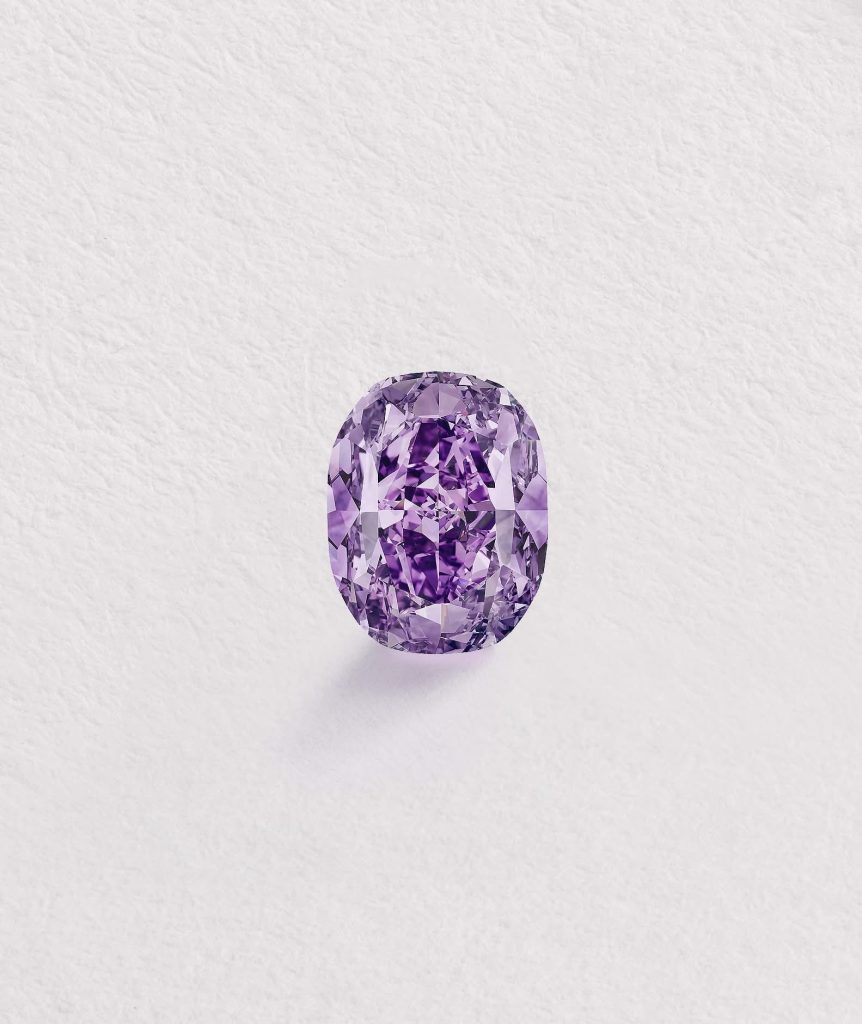
Purple is one of the rarest diamond colours in the world. Although gem experts are not certain about how purple and violet diamonds obtain their colour, it’s theorized that the combination of boron and hydrogen plays a part. If a stone simply has boron imperfections in its anatomical features, it would present as a blue colour. It’s the addition of hydrogen that brings out the purple in these diamonds.
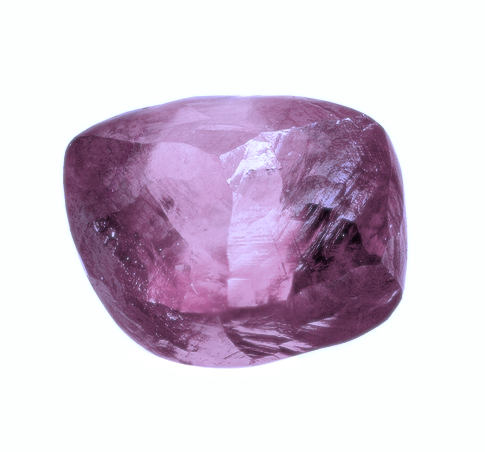
Most purple stones contain secondary hues of pink, red, blue, or grey. These diamonds can be divided into two categories depending on which secondary hue is present:
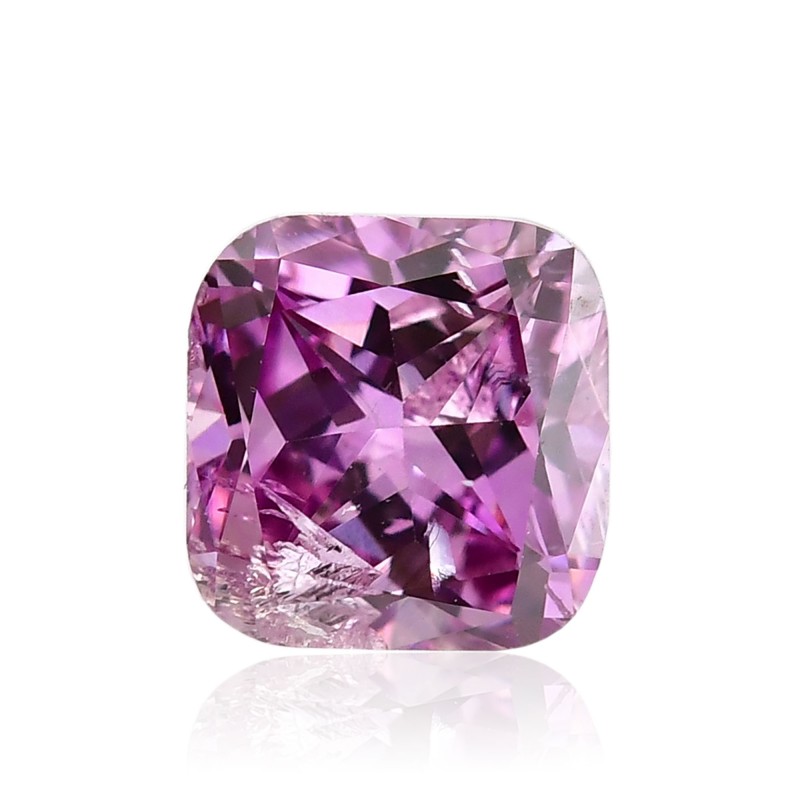
- Diamonds with secondary hues of pink and red are labelled under ‘Purple’
- An example of a diamond under this category could be a stone such as a ‘Fancy Purple Pink’ diamond.
- Diamonds with secondary hues of blue and grey are labelled under ‘Violet’
- An example of a diamond under this category could be a stone such as a ‘Fancy Violet Gray’ diamond.
For purple diamonds, there are 6 different intensity levels: Fancy Light, Fancy, Fancy Intense, Fancy Dark, Fancy Deep, and Fancy Vivid.
Pink Diamonds
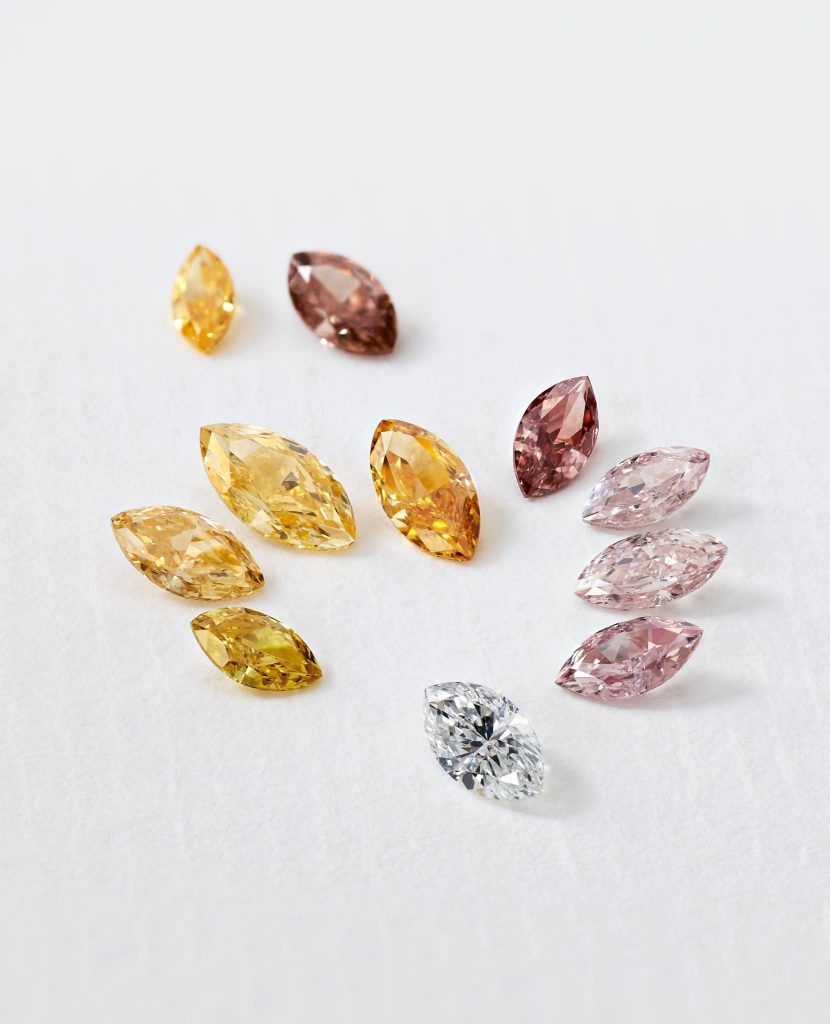
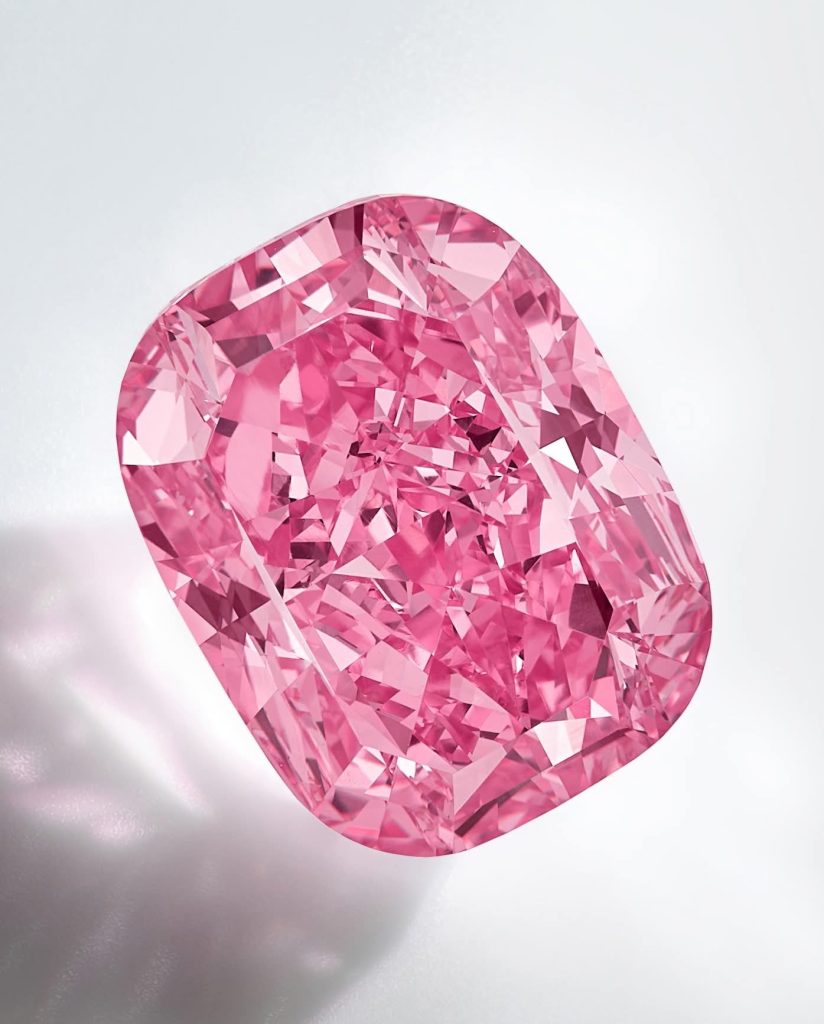
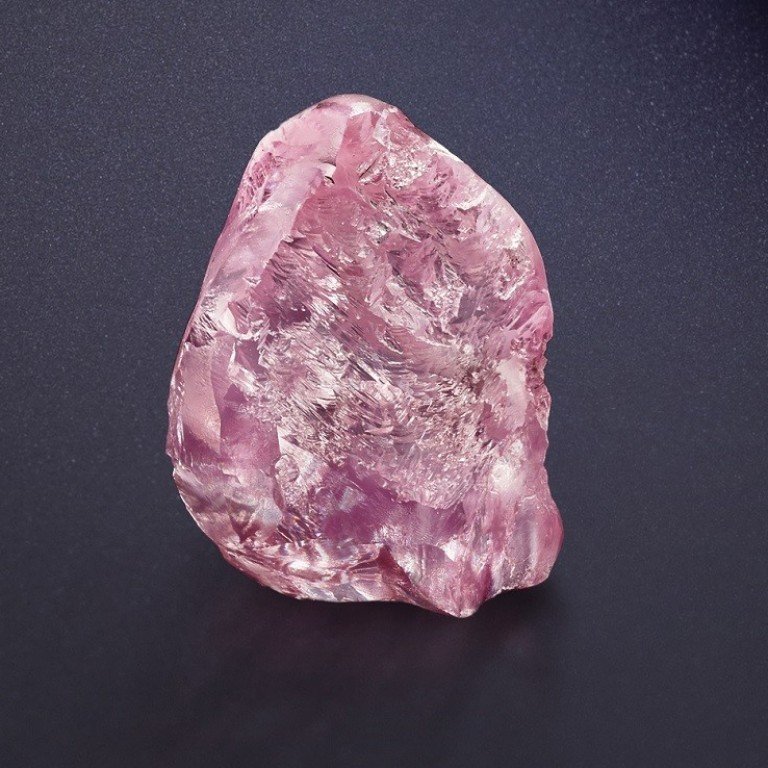
As with other coloured diamonds, pink diamonds can be graded faint, very light, light, fancy light, fancy intense, fancy deep and fancy vivid. And like other hues, the stronger the colour, the higher the price tag. Pink diamonds often feature secondary hues – an additional modifying colour.
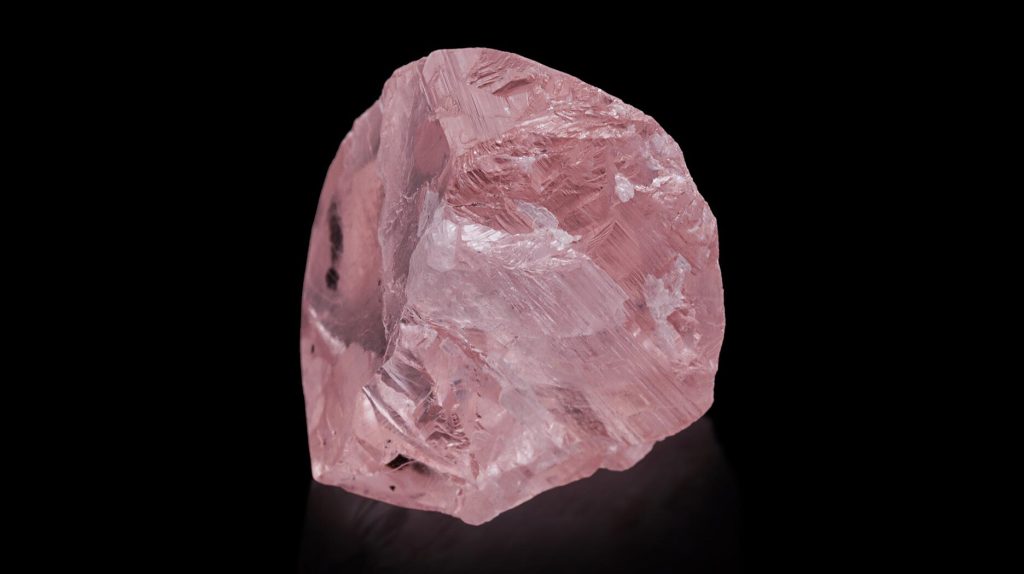
The most common modifying colours are orange, brown and purple. These diamonds would be described in the certificate as orange-pink, brown pink and purple-pink (not that the main colour is the last one mentioned). And if the modifier colour is very weak it would be orangy, brownish or purplish…

While we do know how coloured diamonds get their colour, to this day it is unclear how pink diamonds get theirs. It is believed that while the diamond is forced to the Earth’s surface, the structure of the diamond somehow becomes altered, causing a deformation. This flaw forces the stone to absorb light differently and emit the pink hue.
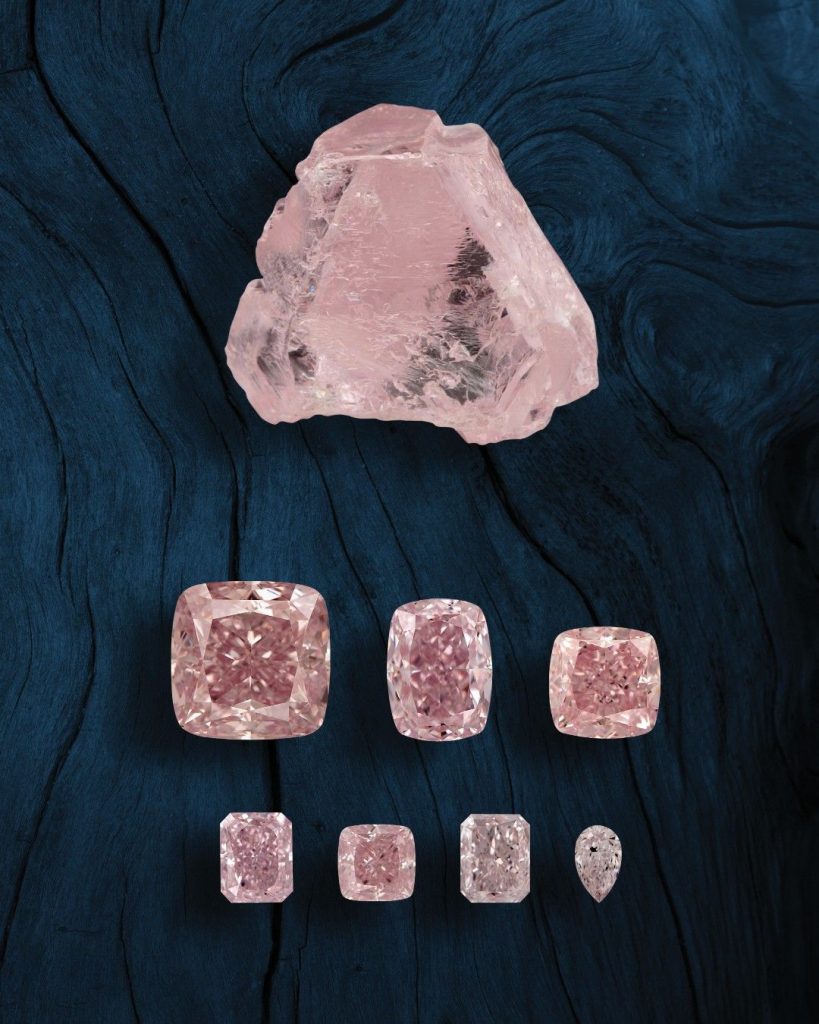
108.39-carat pink diamond unearthed at the renowned Kao Mine in Lesotho. Courtesy GIA Monograph.
Natural pink diamonds can be found in Brazil, Russia, Siberia, South Africa, Tanzania and Canada. However, the majority of these breathtaking stones hail from the Argyle Mine in Australia, which is owned by Rio Tinto. The firm’s headquarters are also in Perth, Western Australia. For proportions and to understand the rarity of pink diamonds, out of every 1 million carats of rough diamonds that the mine produces, just 1 carat is suitable to sell.
Brown Diamonds
Structural defects in the diamonds lattice give brown diamonds their colour; as the defects absorb light. The presence of nitrogen can also give a diamond a brown hue. The term “champagne diamond” (lightly tinted brown diamond) and “cognac diamond” (dark brown diamond) were coined to better promote these loose brown diamonds. The truth is, in the past, natural fancy brown diamonds weren’t especially trendy. However, champagne diamonds have managed to gain increasing attention in recent years from collectors and investors.
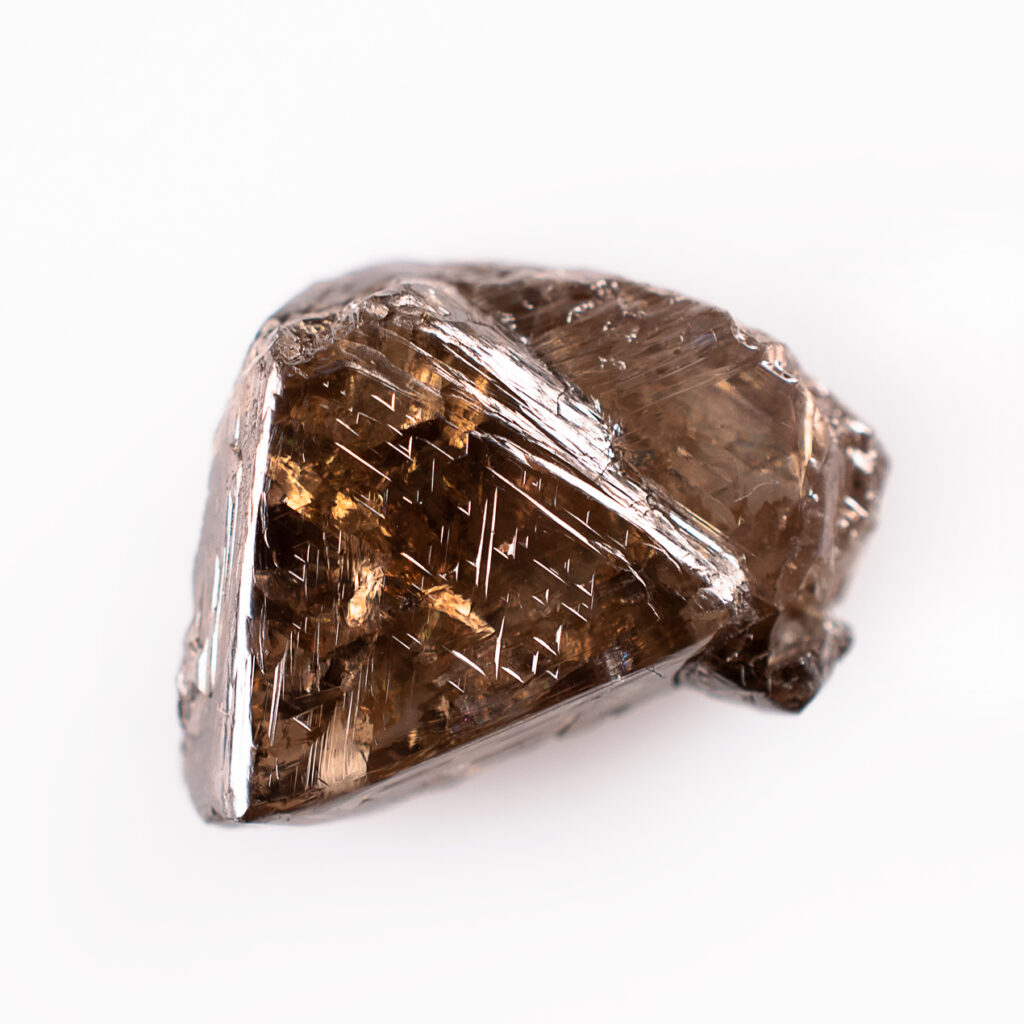
When Rio Tinto’s Argyle Mine determined that nearly half of the stones in their deposit were brown, it was clear that some marketing tactics were required to alter consumers’ perceptions about these coloured diamonds. They coined the term “champagne diamonds,” which suggested an air of luxury, elegance and affluence like the celebratory beverage they were named after.
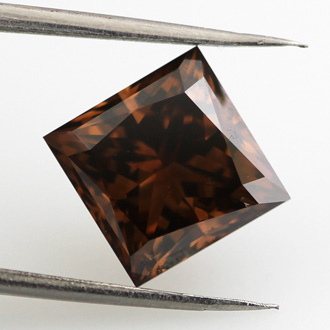
You will never see the word “champagne” on a grading report from the Gemological Institute of America. Instead, the colour would be described as fancy light yellow-brown, fancy yellowish-brown, or a similar phrase that indicates the hue and intensity. On the other hand, The Argyle Mine has devised a different colour scale specifically to grade champagne diamonds, which ranges from C1 to C7. C1 to C2 is a light champagne, C3 to C4 are medium champagne, C5 to C6 are dark champagne, and C7 is considered “cognac.’
Black Diamonds
Contrary on how coloured diamonds are formed, black diamond colour is not related to trace elements. Black diamonds, like normal colourless diamonds, are formed by high pressure on the element carbon under the surface of the earth that produces a repetitive geometric pattern in the crystal lattice.
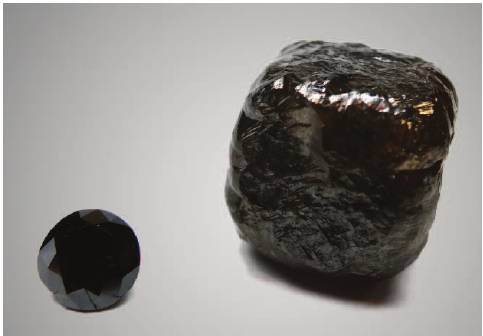
The exceptional colour formation in black diamonds is caused by graphite inclusions and random clustering throughout and it is even believed that some black diamonds fell to the earth as meteorites, adding to their mystic appeal.
Black diamonds are not transparent and do not display fire in the way that colourless and other coloured diamonds do, but can still be incredibly impressive.
Black diamonds may show white or grey inclusions that make them very unique. Due to the crystal structure, a black diamond will actually absorb most of the light that enters it. Rough natural black diamonds are found in very few locations, including Brazil and Central America.
Gray Diamonds
Most of the grey-coloured diamonds get their colour due to high concentrations of hydrogen and on rare occasions boron-like blue diamonds.

They come in the following intensity levels: Light Gray, Fancy Light Gray, Fancy Gray, Fancy Dark Gray, and Fancy Deep Gray (no such thing as vivid grey, faint grey etc.). And the common colour modifiers according to the GIA are yellowish, greenish, bluish and violet.
PLEASE PROCEED TO THE QUIZ